
Pet Travel Crates: A Practical Selection and Flight-Ready Guide
August 18, 2026
Choose safe pet travel crates for airline, PCS, international, and Hawaii moves—covering sizing, paperwork, labeling, and handoffs for a smoother move.
Choosing pet travel crates is not simply a matter of buying the largest kennel that fits your budget. For a military PCS, international relocation, executive move, or Hawaii arrival, the crate must work across several handoffs: home pickup, ground transport, airline acceptance, customs or quarantine review, and final delivery. This guide helps you decide what type and size of crate fits the animal, route, and operating conditions—and then turn that decision into a reliable travel setup.
The right crate reduces preventable problems, but it cannot compensate for incomplete import documents, poor acclimation, an unsuitable itinerary, or a last-minute airline rejection. Treat the crate as one part of a transport system. Your decision should account for the pet’s measurements, species and temperament, airline rules, destination requirements, weather, connection risk, and who will be responsible for the animal at each stage.
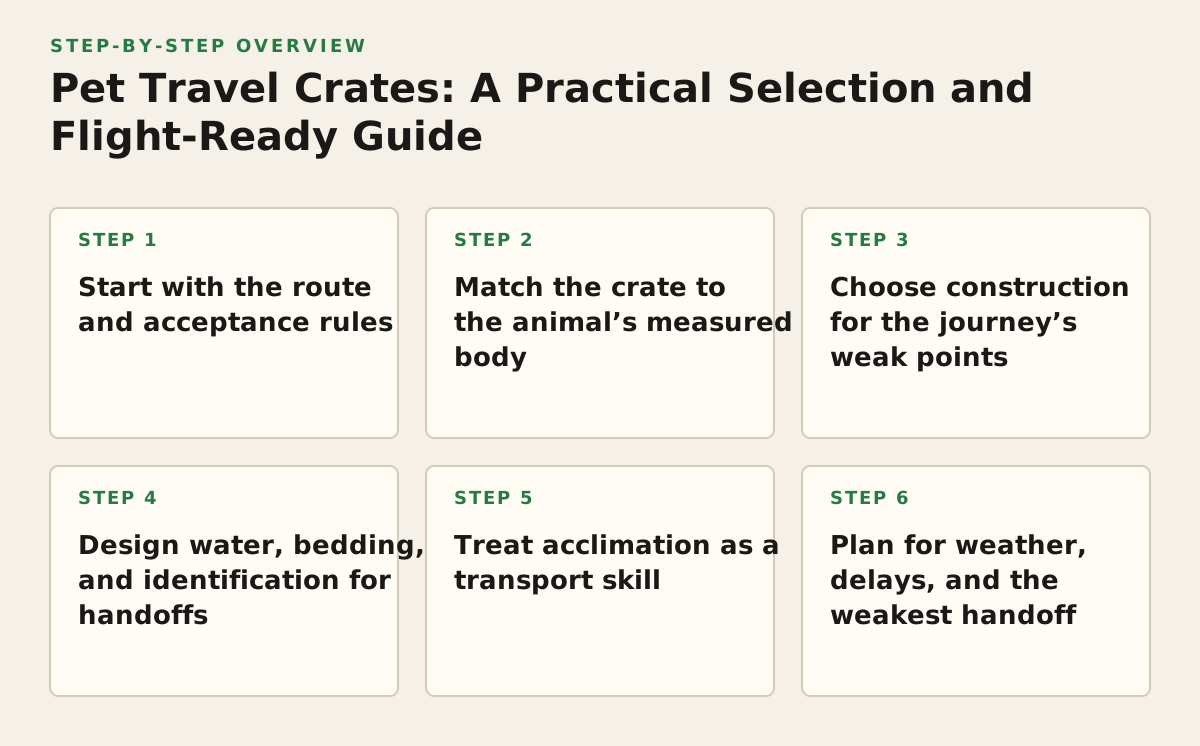
1. Start with the route and acceptance rules
Route requirements come before crate shopping. A crate that is appropriate for a domestic relocation may still be rejected for an international flight, a military route, or a destination with special quarantine procedures. Begin by listing every carrier and authority involved, rather than relying on the first product description that says “airline approved.”
For air transport, IATA’s Live Animals Regulations are an important industry reference for container construction, ventilation, food and water access, and animal handling; however, the operating airline may impose additional rules or refuse a particular aircraft or itinerary. The IATA pet travel guidance identifies the Live Animals Regulations as the standard used for transporting live animals by air: IATA pet travel guidance. Confirm the current acceptance decision directly with the airline or through the transport coordinator arranging the booking.
At the destination, the crate may also be inspected by customs, agricultural authorities, or quarantine staff. For dogs and cats entering the United States, the CDC directs owners to review current dog import requirements, which vary depending on the dog’s recent travel history and other factors: CDC dog importation requirements. For destinations such as Hawaii, the state’s animal quarantine authority publishes its own entry procedures, forms, and program information: Hawaii Animal Quarantine information.
Build a route-control sheet
- Origin address, destination address, and any military installation or diplomatic facility involved.
- Airline, operating carrier, aircraft changes, and every planned connection.
- Whether the pet travels as accompanied baggage, cargo, or through another accepted service.
- Destination import, quarantine, health certificate, microchip, vaccination, or inspection requirements.
- Who controls the pet and crate at pickup, airport acceptance, transfer, customs, and delivery.
- Weather exposure at origin, connection points, and destination on the planned travel date.
Failure mode: buying for one airline and flying another. A booking may be marketed by one airline while another carrier operates the flight. Their acceptance policies, aircraft limitations, and cargo handling procedures can differ. A crate that passed a store’s “airline approved” test does not guarantee acceptance at the airport.
Implementation example: A family relocating to Japan under military orders lists the originating airport, operating carrier, connection airport, arrival airport, installation delivery address, and the destination’s import paperwork deadline. They ask the transportation coordinator to confirm the crate model, exterior dimensions, door design, and water-bowl arrangement against the operating carrier’s current instructions before purchasing it.
2. Match the crate to the animal’s measured body
Measure the pet, not the breed label. Breed averages are useful for estimating, but they do not account for a long-backed dog, a tall cat, a heavy coat, an anxious posture, or the need to turn comfortably without hitting the roof. Measure while the animal is standing naturally on a level surface.
Use four measurements
- Length: nose to the base of the tail, or to the front of the chest if the tail measurement is not practical, plus the space needed to stand and turn.
- Shoulder height: floor to the highest point of the shoulder or upper back, depending on the animal’s posture.
- Standing height: floor to the top of the head or ear, whichever is higher while standing naturally.
- Width: the widest part of the body, including the coat, with room to turn without scraping.
The crate should allow the pet to stand without the head pressing into the roof, turn around, sit, and lie in a normal position. Avoid both extremes: a crate that is too small can cause distress and obstruction, while one that is unnecessarily oversized may be difficult to secure, exceed aircraft limits, or leave the animal sliding during handling.
Do not compress a thick-coated dog’s coat to make a measurement. For a cat, account for the animal’s ability to sit upright and turn rather than measuring only its curled sleeping position. If the pet is still growing, use a realistic adult measurement and confirm the final fit close to departure.
| Decision point | What to check | Priority | Illustrative action |
|---|---|---|---|
| Body fit | Standing height, body length, width, turning space | Non-negotiable | Reject any crate that limits a natural stand, turn, or lie-down position. |
| Route compatibility | Operating carrier, aircraft, connection, destination handling | Non-negotiable | Obtain written or recorded confirmation before final purchase. |
| Construction | Rigid shell, secure fasteners, ventilation, door and hinges | High | Inspect every attachment point and replace weak hardware. |
| Water and bedding | External-fill bowl, spill control, absorbent lining | High | Use a setup the animal can access without the bowl occupying its resting area. |
| Handling | Forklift or hand-carry points, labels, weight, liftability | High | Confirm handlers can move the loaded crate without tilting it sharply. |
| Acclimation | Time available and pet’s response to confinement | High | Begin calm, supervised sessions well before departure. |
| Contingency | Delay, missed connection, damaged crate, weather hold | Medium to high | Pack duplicate documents, spare absorbent material, and contact numbers. |
Failure mode: sizing for comfort at home but not for handling. A giant crate may fit the pet but be impossible for two handlers to lift safely, difficult to maneuver through a cargo facility, or incompatible with the aircraft’s cargo door. Ask for the crate’s external dimensions and shipping weight, not only its interior measurements.
Implementation example: A long-legged German Shepherd can stand inside a medium kennel at home but touches the roof when fully upright. The family measures again, checks the airline’s exterior-dimension limits, and chooses the largest compatible crate that permits a natural stand without creating an impractical load for airport staff.
3. Choose construction for the journey’s weak points
Rigid construction is the default for air travel, but “rigid” does not mean every plastic kennel is equally suitable. Inspect the door, hinges, fasteners, ventilation openings, corner joints, handle areas, and the base. A crate can fail because of one weak latch or because a handle encourages handlers to lift a heavy, moving animal at an unstable angle.
For a complex move, prioritize these features:
- A door that latches securely and cannot be pushed open by the pet.
- Ventilation openings that provide airflow without creating large escape points.
- A solid, leak-resistant base that can contain ordinary accidents.
- Fasteners and connectors that remain secure after repeated handling.
- Exterior surfaces that accept clear identification labels without hiding ventilation.
- Enough structural strength for the loaded crate to be moved without flexing.
Metal doors and hardware require careful inspection. A metal door is not automatically safer if the latch can be manipulated, the hinge is exposed, or the door frame flexes. Examine how the door closes under pressure and whether a handler can confirm that it is fully latched without opening it again.
Soft-sided carriers can be useful for cabin travel when the airline expressly permits them and the pet fits beneath the seat. They are generally a different solution from a kennel intended for checked or cargo transport. Do not substitute a soft carrier for a rigid crate simply because it is easier to carry.
Failure mode: adding unapproved modifications. Wire ties, screws, locks, blankets, and aftermarket accessories can obstruct airflow, create sharp edges, prevent inspection, or interfere with airline acceptance. Never seal the pet inside with a padlock or make a modification that prevents authorized handlers from opening the crate if necessary. Ask the carrier or transport professional which securing method is accepted for that route.
Implementation example: Before a transatlantic move, the owner assembles the crate, presses on each corner, checks every fastener, opens and closes the door repeatedly, and photographs the intact crate and labels. A replacement fastener kit and the manufacturer’s instructions travel with the household documents, not inside the animal’s compartment.
4. Design water, bedding, and identification for handoffs
A crate is also a handoff and communication tool. Airport agents, customs personnel, ground drivers, and delivery staff may not know the pet personally. Labels and accessible care information reduce ambiguity when a flight is delayed or the animal changes hands.
Use a simple care system
- Attach the pet’s name, species, owner or handler name, destination address, and multiple current phone numbers.
- Include the airway bill or booking reference when one is issued, while keeping a duplicate with the human traveler or coordinator.
- Mark the crate with directional and live-animal handling labels only where they do not cover ventilation or inspection information.
- Use a secure water bowl that can be refilled from outside if the airline requires or permits that design.
- Provide absorbent bedding that remains flat and does not create a choking or entanglement concern.
- Keep medication instructions and veterinary contact details with the paperwork, not loose inside the crate.
Water access must be practical rather than decorative. A large bowl can reduce usable floor area or spill during movement; a small bowl may be inadequate for the animal or route. Introduce the actual bowl during acclimation so the pet knows how to drink from it. Do not add food, toys, or chews without confirming that they are appropriate for the animal and accepted by the carrier.
Identification must survive moisture and handling. Use a permanent marker or printed label protected from rain, plus a second identification method on the crate. Keep photos of the pet, crate, labels, and paperwork in the owner’s phone and with the relocation coordinator. These records do not replace official documents, but they can clarify identity if a label is damaged.
Failure mode: over-labeling the crate. Tape, stickers, and oversized instructions can cover ventilation, door hardware, or the carrier’s own labels. Put essential information in a consistent, visible area and place detailed care notes in the document packet accessible to handlers.
Implementation example: A diplomatic family prepares one waterproof label with the pet’s name, destination contact, and emergency number, then places a duplicate in a document sleeve held by the driver. The crate contains only the approved bedding and water setup; feeding instructions, health records, and contact escalation steps remain with the travel documents.
5. Treat acclimation as a transport skill
Crate acclimation is not a single practice session. It is a gradual process that teaches the pet that the crate is a predictable resting place, even when the door is closed and the crate is moved. This matters especially for pets facing a long ground transfer before or after a flight.
Use staged exposure
- Place the empty crate in a familiar room with the door secured open.
- Allow the pet to investigate without forcing entry; reward calm behavior near or inside it.
- Introduce the actual bedding, water bowl, and travel configuration.
- Close the door briefly while the pet remains calm, then extend the interval gradually.
- Move the crate short distances and return it to a quiet place.
- Practice loading into the vehicle and waiting without turning the exercise into a departure signal.
- Repeat the setup after cleaning and reassembly so the pet remains comfortable with the final configuration.
Use calm, ordinary routines rather than dramatic farewells. The objective is not to exhaust the pet or force tolerance. If the animal pants excessively, vocalizes continuously, attempts escape, injures itself, or shows escalating distress, stop and consult a veterinarian or qualified behavior professional. Sedation decisions must come from the veterinarian and should be discussed with the airline or transport coordinator; an owner should not improvise medication for air travel.
Failure mode: first confinement on departure day. A dog that willingly enters an open crate at home may panic when the door closes in a noisy cargo facility. A cat may tolerate a short car ride in a carrier but react poorly to a long wait beside unfamiliar equipment. Practice the complete sequence—crate, door, movement, vehicle, waiting, and release—before the move.
Implementation example: A cat traveling from Virginia to Hawaii begins with open-door meals near the crate, then short closed-door periods, then vehicle practice. The owner uses the same carrier, bedding, and bowl planned for the flight and notes which setup keeps the cat calm enough to eat and settle.
6. Plan for weather, delays, and the weakest handoff
The itinerary determines the crate’s operating environment. A comfortable room at home tells you little about a curbside drop-off, a hot vehicle, an aircraft delay, or a cold connection airport. Weather restrictions and temperature policies are carrier-specific, so confirm them for the operating flight and date rather than assuming a general rule applies.
Build a contingency plan around events that are inconvenient for people but potentially dangerous for animals:
- Flight cancellation or a missed connection.
- Unexpected customs or agricultural inspection.
- Ground traffic that delays airport arrival or delivery.
- A damaged bowl, wet bedding, or loose label.
- A pet that refuses water, develops gastrointestinal upset, or becomes unusually distressed.
- A change in the receiving person, address, or installation access procedure.
For each event, specify who is authorized to make decisions. A relocation coordinator may manage the airline and ground provider, while the owner or veterinarian provides medical direction. For a PCS move, the service member may be traveling separately from the pet. For an executive or diplomatic move, a designated household representative may receive the animal discreetly. The crate label and the operations file should make those roles clear without exposing unnecessary personal information.
Failure mode: treating live tracking as a substitute for supervision. A tracking update can show that a shipment moved, but it does not replace an accountable person who can respond to a delay, inspect the crate, or communicate with the airline. Live tracking is useful only when paired with escalation contacts and a defined response plan.
Implementation example: For a Hawaii relocation, the family identifies the driver, airline contact, destination representative, and veterinarian in a one-page escalation sheet. If the flight changes, the coordinator confirms the new handoff plan and receiving address before the pet is released from the airport.
7. Coordinate the crate with paperwork and delivery logistics
A compliant crate cannot fix a paperwork failure. Health certificates, vaccination records, microchip information, import permits, inspection appointments, and quarantine documentation must be matched to the correct pet and route. Requirements can change, and some destinations require documents to be issued or endorsed within specific windows. Start with official destination guidance and have a veterinarian or qualified relocation professional verify the final packet.
The U.S. Department of Agriculture’s Animal and Plant Health Inspection Service provides a destination-based tool for reviewing pet travel requirements, including country-specific information: USDA APHIS pet travel guidance. Use it as a starting point, then confirm the destination authority’s current rules and the airline’s document process.
Assemble a controlled document packet
- Pet identification details that match the crate label and booking.
- Current veterinary records and destination-required certificates.
- Import permits, pre-approvals, or quarantine reservations where applicable.
- Airline booking details and cargo or baggage references.
- Emergency contacts for the owner, coordinator, veterinarian, and receiver.
- Copies stored digitally and physically in separate locations.
Coordinate the crate with delivery logistics. Confirm whether the destination driver can access a base, gated residence, secure facility, quarantine station, or hotel. Verify who will receive the pet and what happens if the traveler is delayed. For military families, the pet’s arrival may not align with household-goods delivery or temporary lodging. For an overseas corporate move, the receiver may need local identification or appointment details before the vehicle arrives.
When moving to or from Hawaii, treat the state’s entry process as a separate workstream rather than a footnote to airline booking. A family may need to align veterinary timing, document submission, airline acceptance, and airport release or quarantine procedures. The operational goal is a coordinated arrival—not merely placing the animal on a flight. Families can review the dedicated Hawaii pet shipping planning resource while confirming current requirements with Hawaii authorities.
Failure mode: using inconsistent names or dates. A microchip record, health certificate, airline booking, and crate label that use different spellings or dates can trigger questions at acceptance or inspection. Before departure, compare every document against the pet’s official identification and the transport booking.
Implementation example: A family flying a dog from Germany to the United States creates a document index with the dog’s exact name, microchip number, owner details, flight reference, and destination address. The coordinator checks the packet against current official guidance and confirms who will meet the dog after release.
Make the decision by risk, not by appearance
When several crates appear suitable, select the one that removes the most consequential uncertainty. A visually attractive kennel with convenient wheels may be less useful than a plain, robust crate whose dimensions and fittings have been confirmed for the operating carrier. The table above can be used as a scoring worksheet: mark each criterion as confirmed, unresolved, or unsuitable, and do not allow a low-priority convenience feature to override body fit or route acceptance.
For a complex move, ask these questions before paying for the crate:
- Can the pet stand, turn, sit, and lie naturally inside it?
- Are the exterior dimensions compatible with every operating carrier?
- Can handlers identify, move, inspect, and secure it safely?
- Can the pet access water without losing necessary floor space?
- Has the animal practiced the exact configuration?
- What is the plan if the flight is delayed or the crate is damaged?
- Do the crate label, booking, veterinary records, and import documents agree?
Practical rule: If you cannot explain who will handle the pet, crate, documents, and delivery decision at every major handoff, the transport plan is not ready—regardless of how good the crate looks.
Implementation plan: make the crate flight-ready in sequence
- Map the complete route in 2026. Record the origin, destination, operating carriers, connections, transport mode, authorities, and final receiver. Separate airline questions from destination-entry questions.
- Measure the pet accurately. Record length, height, width, coat condition, growth expectations, and any mobility or behavioral concern. Re-measure if the move is scheduled far ahead.
- Confirm acceptance before purchase. Send the proposed crate’s manufacturer, model, interior dimensions, exterior dimensions, door type, and total weight to the airline or transport professional coordinating the move.
- Inspect and configure the crate. Check the shell, base, door, hinges, fasteners, ventilation, labels, water bowl, and bedding. Photograph the completed setup for the travel file.
- Start acclimation early. Practice entry, closed-door rest, movement, vehicle loading, and the actual bedding and water arrangement. Escalate distress to a veterinarian or behavior professional.
- Build the document and contact packet. Match names, microchip data, dates, booking information, import documents, veterinary records, and emergency contacts. Store paper and digital copies separately.
- Confirm weather and handoffs near departure. Recheck the operating carrier’s current instructions, connection plan, destination access, receiving person, and delay procedure. Do not assume an earlier approval remains valid after a flight change.
- Conduct a final acceptance review. Verify fit, labels, water access, bedding, crate condition, paperwork, and escalation contacts. The person delivering the pet should know exactly where to go and whom to call.
For families that need coordinated pickup, airline booking, paperwork support, customs assistance, tracking, and destination delivery, BestPetTravel can manage the transport plan around the pet’s crate and route. Its services include domestic and international pet transportation, with specialized support for military pet shipping, overseas relocations, and complex family moves; review the available options at BestPetTravel.
Authored with NotFair SEO