
Pet Shipping Airlines: How to Compare Carriers for Safe Relocation
September 15, 2026
Compare pet shipping airlines by route, crate, paperwork, and cargo rules so military, international, and Hawaii moves avoid costly travel-day surprises.
Choosing among pet shipping airlines is not the same as buying the cheapest passenger ticket. A workable itinerary must match the animal’s size, the route’s import rules, seasonal limits, aircraft and airport handling, crate requirements, and the airline’s available service on the exact travel date. For a PCS family, an overseas employee, or a veterinarian helping a client, the right carrier is the one whose written rules fit the entire movement—not merely one flight segment.
What “Pet Shipping Airlines” actually includes
The phrase covers several different services that are often confused during planning. A dog or cat may travel in the passenger cabin, as checked baggage where an airline permits it, or as manifested air cargo. Some airlines sell or coordinate more than one of these options; others restrict pets according to aircraft, destination, weather, military status, or the type of animal. A pet shipper may also combine an airline flight with ground transport, customs clearance, and delivery at the destination.
Three airline transport models
- Cabin travel: A small dog or cat travels in an airline-approved carrier under the seat, subject to the airline’s reservation, carrier, and destination rules.
- Checked or hold travel: The animal travels in a temperature-controlled aircraft compartment when the airline offers that service and the itinerary qualifies. This is not available on every route or aircraft.
- Manifested cargo: The pet receives an air waybill or cargo booking and is handled through the airline’s cargo process. This is commonly considered for larger animals, international moves, and routes where passenger-pet service is unavailable.
“Cargo” does not automatically mean unsafe, and “cabin” does not automatically mean appropriate. Cabin transport can be impossible for a large dog or for a destination with import procedures that require specialized handling. Conversely, a cargo booking may provide the only practical way to move a large breed internationally. The decision turns on route eligibility, animal fit, and handling continuity.
Airline policies are only one layer of the job. The U.S. Department of Agriculture’s Animal and Plant Health Inspection Service explains that pet travel requirements depend on the destination country and may include health certificates, vaccinations, tests, or other steps; its 2026 guidance is a useful starting point, not a substitute for checking the destination authority. See the official USDA APHIS pet travel guidance for the applicable country. Hawaii has a separate state quarantine system, so a move there belongs in a distinct planning track; the Hawaii Department of Agriculture’s animal quarantine page sets out the state’s current program and documents.
Airline, cargo provider, and relocation company roles
An airline operates the flight or its cargo service. A cargo agent may make the booking and accept the animal at a cargo terminal. A relocation company can coordinate flights, paperwork, customs support, live tracking, ground transfers, and delivery logistics, but it cannot waive an airline’s acceptance rule or a government’s import requirement. Keeping these roles separate prevents a common failure: assuming that a confirmed ground transfer means the airline has confirmed the pet.
For a military household, that distinction matters when comparing military pet shipping options. A PCS itinerary may involve a government booking, a commercial airline segment, and a privately arranged pet movement. Each can have a different confirmation process.
Which airlines and providers should be on your shortlist?
There is no universal “best” pet airline in 2026. Availability changes by origin, destination, aircraft, season, animal, and whether the booking is passenger or cargo. The practical comparison below identifies real carriers and the policy pages to consult. It is a shortlist for verification, not a promise that every carrier will accept every pet on every route.
| Carrier or service | Why it may belong in the comparison | What must be verified before booking |
|---|---|---|
| Alaska Airlines | Its official pet-travel information separates cabin travel from pets traveling in the aircraft hold, giving owners two policy tracks to investigate. | Check the exact origin, destination, aircraft, temperature restrictions, reservation process, carrier dimensions, and whether the service is available on the selected date. Alaska’s pet travel page is the controlling reference. |
| American Airlines | American publishes a dedicated pets and special assistance policy page, making it a reasonable carrier to check for qualifying domestic or international itineraries. | Confirm whether the animal can travel in cabin, as checked baggage, or through cargo for the particular trip; verify destination restrictions and acceptance procedures directly in the current American Airlines pet policy. |
| Delta Air Lines | Delta provides an official pet-travel overview that explains its current passenger-pet process and limitations. | Ask about cabin eligibility, aircraft and route restrictions, advance arrangements, connection risk, and whether a separate cargo solution is required. Start with Delta’s official pet travel overview. |
| Lufthansa | For some Europe-linked international plans, Lufthansa is a carrier worth checking because it publishes separate guidance for animals traveling in the cabin or aircraft hold. | Verify the country-specific import documents, connection airport, acceptance method, kennel dimensions, and whether the booking belongs with passenger services or cargo. See Lufthansa’s animal travel information. |
| Lufthansa Cargo and other airline cargo desks | A cargo desk can be relevant when the pet is too large for cabin travel, when passenger-pet service is unavailable, or when the route requires a manifested shipment. | Confirm live-animal acceptance, airport drop-off and collection, airway-bill details, handling at connections, and the person responsible for final delivery. An airline cargo product page is not proof that a particular itinerary is open. |
These examples illustrate a method rather than a ranking. Start with airlines that operate the needed city pair, then remove any that cannot carry the animal on the relevant aircraft or date. A carrier’s passenger policy may not describe its cargo process, and a cargo department may impose a separate booking timeline, acceptance window, or airport location.
How to build a usable airline shortlist
- Write the complete route, including the first ground pickup, every flight number, each connection, and the final delivery location.
- Classify the shipment as cabin, hold, or cargo before comparing fares. The cheapest passenger itinerary may not be a pet-eligible itinerary.
- Check the airline’s current policy page and contact the appropriate passenger or cargo desk with the animal’s species, breed, weight, kennel dimensions, and travel date.
- Ask for written confirmation that names the pet, route, flight segments, transport mode, and acceptance location.
- Compare the full movement: ground legs, document preparation, terminal handling, customs, and delivery—not just the flight price.
A useful written question is: “Will this specific dog or cat, in this specific kennel, be accepted on flight numbers A and B on the proposed date, and where must the animal be tendered and collected?” That wording forces the answer away from a generic policy summary.
Why the airline choice changes the risk profile
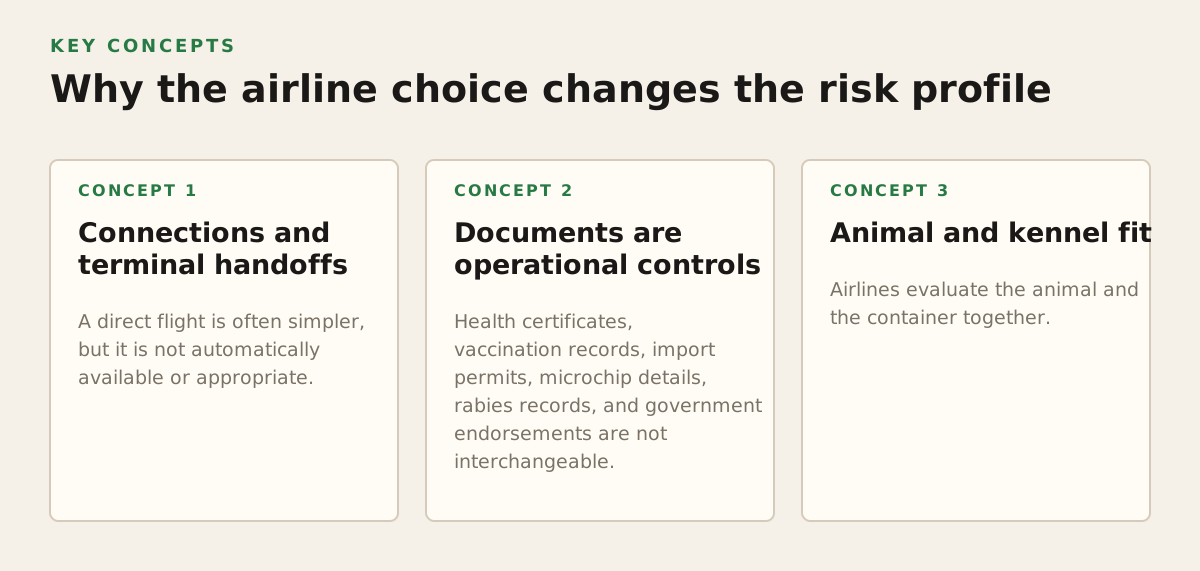
A pet itinerary is a chain. Each additional handoff creates another point where identification, documents, timing, or temperature control can fail. The goal is not simply fewer flight hours; it is fewer uncontrolled transitions while still meeting the destination’s legal requirements.
Connections and terminal handoffs
A direct flight is often simpler, but it is not automatically available or appropriate. A connection may be necessary because the origin has no long-haul service, because a cargo route uses a different hub, or because the destination authority requires entry through a particular airport. In those cases, evaluate the connection as an operational event:
- Does the pet remain under one airline or move between airlines?
- Is the connection protected by one booking or split across separate shipments?
- Who moves the animal between terminals?
- Can the receiving team identify the pet and verify the crate seal or documents?
- What happens if the first flight is delayed and the connection closes?
A split itinerary can be workable, but only when a named party owns the handoff. “The airline will transfer the pet” is too vague unless the airline has confirmed the exact process. If the animal must be collected and re-tendered, the plan needs a person, location, time window, and contingency—not merely a flight number.
Documents are operational controls
Health certificates, vaccination records, import permits, microchip details, rabies records, and government endorsements are not interchangeable. A document can be legally correct yet unusable if the name, microchip number, dates, language, or destination airport does not match the shipment. Government rules also vary by species and destination, and some documents are valid only within a defined period.
Use a document matrix with one row per requirement:
- Requirement: for example, microchip, rabies vaccination, health certificate, import permit, or government endorsement.
- Owner: veterinarian, owner, shipper, airline, customs broker, or government office.
- Deadline: the earliest action date and the final valid date, if applicable.
- Proof: the file name, original document location, or confirmation number.
- Travel match: the pet’s identity, route, flight, and destination entry point.
The airline confirms transport acceptance; it does not generally determine whether a foreign government will admit the animal. Conversely, a complete import file does not reserve cargo capacity. Treat government compliance and airline acceptance as separate gates that must both be cleared.
Animal and kennel fit
Airlines evaluate the animal and the container together. A small cat that fits an under-seat carrier may have a very different set of options from a large dog requiring a rigid kennel. Breed-specific restrictions, health concerns, snub-nosed conformation, age, weather, and aircraft type can affect eligibility. The pet’s actual measurements matter more than a breed label or a photo.
Measure the animal while standing naturally and compare those measurements with the airline’s current kennel instructions. For a cargo move, confirm:
- internal kennel length, width, and height;
- ventilation and door construction;
- water and food attachment requirements;
- absorbent bedding and secure identification;
- feeding instructions and emergency contact information.
Do not sedate an animal for air travel without discussing the risks with the attending veterinarian. A veterinarian can also identify whether a medical condition, age, pregnancy, or anxiety changes the transport decision. The airline’s acceptance rule and the veterinarian’s clinical judgment answer different questions.
How a pet-airline booking works from quote to delivery
Professionals usually begin with a movement brief rather than a fare search. The brief records the pet’s species, age, breed, weight, kennel measurements, origin, destination, preferred dates, owner’s travel plans, and whether the shipment is tied to PCS orders, an employment start date, a diplomatic assignment, or a closing date.
Stage 1: Feasibility before payment
First determine whether the legal and physical route exists. Check the destination’s entry rules, airport-of-entry requirements, airline service, and ground access. For Hawaii, the state program may require advance preparation and inspection-related steps, so owners should not treat the move as an ordinary domestic flight. For international routes, check both the departure country’s export process and the destination’s import process.
At this stage, ask the airline or cargo provider:
- Is the animal accepted on each segment?
- Which service—cabin, hold, or cargo—applies?
- What are the booking and tender deadlines?
- Which airport terminal accepts and releases the pet?
- Are there seasonal, aircraft, breed, or connection restrictions?
- What happens if the flight is delayed, diverted, or canceled?
Do not buy a nonrefundable human ticket first and assume the pet can be added later. Pet capacity and cargo acceptance can be constrained independently of passenger-seat inventory.
Stage 2: Documents, kennel, and veterinary work
Once a route is plausible, create the document matrix and schedule veterinary work backward from the destination rule. A certificate issued too early, a missing government endorsement, or an incorrect microchip number can force a delay even when the airline booking is valid.
The kennel should be selected early enough for the animal to become comfortable with it. The container must meet the airline’s current specifications, but “airline approved” printed on a product listing is not a universal guarantee. Confirm the dimensions and construction with the actual carrier or cargo desk.
Stage 3: Confirmation and handoff
Obtain a written itinerary that distinguishes the pet booking from the owner’s reservation. Record the airline confirmation number, cargo airway bill if applicable, tender location, collection location, contact names, and emergency escalation path. Keep paper and digital copies of essential documents with the traveler or assigned handler rather than relying on one checked bag.
On travel day, the handler should inspect the kennel, labels, water attachment, documents, and identification before acceptance. At destination, the receiving party should verify the pet’s identity before leaving the airport, cargo terminal, customs facility, or quarantine inspection area. This is where chain of custody becomes a practical checklist, not an abstract compliance phrase.
Stage 4: Delivery and exception handling
A pet may arrive before its owner, especially on a cargo itinerary or a move involving customs. Arrange who can legally collect the animal, where the pet will wait, and how final delivery will occur. A relocation provider can coordinate those steps, but the owner should still know the named contacts and escalation sequence.
Use a simple exception plan:
- Delay: call the airline or cargo desk and confirm the pet’s location and next movement.
- Document discrepancy: contact the responsible veterinarian, government office, or broker before attempting re-tender.
- Missed connection: identify who controls rebooking and where the pet is housed during the wait.
- Arrival problem: confirm customs, quarantine, inspection, and delivery responsibility before the flight departs.
Where pet-airline plans commonly break
The most expensive failures usually occur before the animal reaches the airport. They come from treating a broad policy statement as a route confirmation or from leaving responsibility between organizations undefined.
Policy pages are not booking confirmations
An airline may say it accepts pets while limiting acceptance to certain aircraft, destinations, seasons, or service types. A search result, call-center estimate, or third-party booking screen may also be outdated. Use the carrier’s current official page to understand the rule, then obtain confirmation for the actual itinerary.
Separate tickets create hidden responsibility gaps
When flights are issued on separate tickets, the first carrier may have no obligation to protect the second segment. This matters even more when the pet is handled as cargo, because cargo acceptance and passenger check-in may occur at different facilities. A lower fare is not a saving if a delay creates an overnight boarding, a missed import window, or a new ground-transfer charge.
Weather and aircraft changes are not theoretical
Airlines can impose temperature-related restrictions or change the aircraft assigned to a route. A kennel that fit one aircraft may not fit another. A pet plan therefore needs a decision point before departure: who monitors the forecast and airline notices, who approves a date change, and how the animal will be cared for if the movement is postponed?
Import timing can defeat an otherwise good flight
Some destinations require permits or certificates to be issued within a specific window. A flight that arrives on a weekend, public holiday, or outside inspection hours may create a practical problem even if the airline accepts the pet. For a government or corporate relocation with a fixed reporting date, build the pet’s arrival plan around document validity and office availability rather than selecting the owner’s flight first.
Illustrative decision examples
- Small cat, domestic direct route: cabin travel may be the simplest option if the cat and carrier satisfy the airline’s current limits and the destination has no additional entry rule.
- Large dog, overseas PCS: manifested cargo may be more realistic than cabin travel. The family should compare the airline cargo desk, kennel requirements, customs process, and final delivery—not just passenger schedules.
- Two dogs moving to Hawaii: treat each animal’s records and identification separately, then coordinate the state program, airline acceptance, and airport transfer as one arrival plan.
- Executive relocation with a fixed start date: favor an itinerary with a clearly assigned handoff and a realistic recovery option over a marginally shorter route with an unprotected connection.
- Veterinarian assisting a client: provide medical records and clinical guidance, but have the owner or shipper obtain the airline’s transport confirmation and destination compliance instructions.
These are planning patterns, not guarantees. The decisive facts remain the animal’s measurements, health, documents, route, date, and the carrier’s written acceptance.
How practitioners choose and manage the final itinerary
A strong recommendation is traceable. Someone reviewing the file should be able to see why the selected airline was eligible, which risks were accepted, and who owns every next action.
Use a weighted comparison, not a single price
For each candidate, score the following as acceptable, uncertain, or rejected:
- Legal fit: destination documents, entry airport, inspection timing, and customs pathway.
- Animal fit: cabin or cargo eligibility, kennel dimensions, breed and health restrictions.
- Operational fit: direct routing, connection ownership, terminal access, and delivery plan.
- Recovery fit: delay handling, rebooking authority, weather response, and overnight care.
- Communication fit: named contacts, written confirmations, and a usable escalation process.
Only compare cost after a candidate passes the first two gates. A lower fare that requires an extra airline handoff or a separate airport transfer may carry more operational risk. A higher-cost cargo movement may be justified for a large dog if it removes an impossible cabin constraint, but the justification should be recorded rather than assumed.
Questions to put in the file
For each proposed airline, retain the policy link and the answers to these questions:
- What exact service will carry the pet?
- What is the accepted kennel size and measured animal size?
- Which flight numbers and aircraft are confirmed?
- Who accepts the pet at origin and releases it at destination?
- Which documents must be original, endorsed, translated, or attached to the shipment?
- What is the plan for a delay, cancellation, missed connection, or document discrepancy?
Date the notes as of 2026 and recheck them near departure. Airline policies and government rules can change; a saved webpage from an earlier planning phase should not be treated as current approval.
A practical recommendation by audience
Military families should begin with the PCS route and official orders, then identify whether the pet moves under passenger, cargo, or separately coordinated arrangements. International families should begin with destination entry rules and work backward to veterinary deadlines. Hawaii-bound owners should begin with the state’s quarantine program before selecting flights. Corporate and diplomatic households should assign one accountable coordinator for discreet document control, ground handoffs, and exception decisions. Veterinarians should help with health suitability and records while directing airline and import questions to the responsible shipper or authority.
The most defensible choice is usually the airline that offers a confirmed, end-to-end workable chain for the particular animal and date—not the carrier with the most attractive generic policy or lowest advertised fare.
BestPetTravel can coordinate door-to-door domestic and international pet transportation, including airline coordination, paperwork, customs support, live tracking, and delivery logistics. For a complex PCS, Hawaii, or overseas move, BestPetTravel is a practical way to keep those moving parts under one plan.
Authored with NotFair SEO