
Pet In Cargo Air Canada: A 2026 Planning Guide for Dogs and Cats
September 21, 2026
Planning a pet in cargo Air Canada move? Learn cargo eligibility, crate rules, documents, routing risks, and safer PCS or international planning steps.
If you are searching for pet in cargo air canada, the practical answer is that a dog or cat that cannot travel in the cabin may need to move through Air Canada Cargo, rather than as ordinary checked baggage. Eligibility depends on the animal, crate, itinerary, aircraft, temperature conditions, and destination rules, so confirm the current booking path with Air Canada Cargo and the import authorities before buying a ticket. Air Canada’s passenger pet guidance and its live-animal cargo information are separate resources: start with the official Air Canada pets page and the Air Canada Cargo live animals page.
What “pet in cargo” means on Air Canada
“Cargo” describes the transportation channel, not simply the location of the animal inside an aircraft. A pet may be accepted as a passenger’s cabin companion, handled under a checked-baggage program where available, or booked as manifested live-animal cargo. Those channels can have different acceptance rules, paperwork, handoff procedures, and payment arrangements.
For a large dog, a cat traveling without its owner, or an itinerary where passenger-baggage pet service is unavailable, the relevant process is usually an Air Canada Cargo shipment. That means the animal is tendered to the cargo operation at an approved location, travels under a cargo air waybill or equivalent shipment record, and is released through the destination’s cargo or animal-import process. It does not mean the pet is placed loosely in a freight compartment.
The crate remains an essential part of the shipment. IATA’s official guidance addresses container construction, ventilation, feeding and watering access, absorbent bedding, labeling, and the animal’s ability to stand, turn, sit, and lie naturally; its Traveler’s Pet Corner is a useful planning reference, but the airline and destination authority still control acceptance for a particular trip.
Cabin, checked baggage, and cargo are different decisions
| Question | Cabin or passenger service | Cargo service |
|---|---|---|
| Who normally starts the booking? | The passenger through the airline’s passenger channel | The shipper, cargo agent, or transportation provider through cargo operations |
| What commonly drives the choice? | Small animal, suitable carrier, and route availability | Animal size, unaccompanied travel, route restrictions, or lack of passenger-pet service |
| What must be coordinated? | Passenger reservation, carrier approval, and airport check-in | Cargo booking, crate acceptance, flight connection, documents, and destination release |
The table is a planning distinction, not a promise that every Air Canada itinerary offers each option. A route can be technically served by Air Canada while still being unsuitable for a particular pet because of aircraft type, seasonal restrictions, connection limitations, or destination controls.
Why cargo status matters for a relocation
The main operational difference is that the pet’s journey is separate from the owner’s passenger itinerary. A military family may fly on government-booked tickets while the dog travels on a different cargo booking. An executive relocating overseas may have a flight confirmed before the animal’s import permit or quarantine arrangement is complete. Treating those as one reservation creates avoidable risk.
Cargo also introduces additional handoffs. The pet may move from the origin tender point to an aircraft, through an intermediate airport, and into a destination release process. Each handoff needs an owner: the airline for flight handling, the shipper for accurate documents and crate preparation, and the destination representative or consignee for pickup and customs or veterinary release.
Temperature and aircraft constraints can override a confirmed plan
Airlines assess whether conditions are suitable for live-animal transport. A booking may require a route change when a ground station, connection, or destination presents problematic heat or cold. The United States Department of Agriculture explains that air transport can be affected by temperature, ventilation, handling, and crate conditions in its pet travel guidance. That is why a nonstop or shorter routing is generally easier to manage than a cheaper itinerary with multiple connections, even when both appear available in a flight search.
Do not select a flight by price alone. Compare the number of handling points, the length of any connection, the airport’s cargo operating hours, and the time between arrival and release. For a PCS move, also compare the flight plan with the family’s arrival date, temporary lodging, rental-car arrangements, and the availability of someone authorized to collect the animal.
Illustrative routing examples
The following are illustrative planning examples, not Air Canada requirements or universal benchmarks:
- Example 1: One dog, one nonstop segment, and one consignee at destination may be preferable to a two-segment itinerary with an overnight connection, even if the latter is less expensive.
- Example 2: Two cats traveling in separate airline-approved crates may need two animal records and two sets of labels, even when one owner is responsible for both.
- Example 3: A family arriving on 15 August 2026 should not assume the pet can be collected on 15 August; the destination’s cargo hours, inspection appointment, and document review may determine the actual release window.
- Example 4: A dog relocating to Hawaii may require a different preparation sequence from a dog moving between two mainland U.S. cities because Hawaii has its own animal-import program.
How an Air Canada cargo pet move is assembled
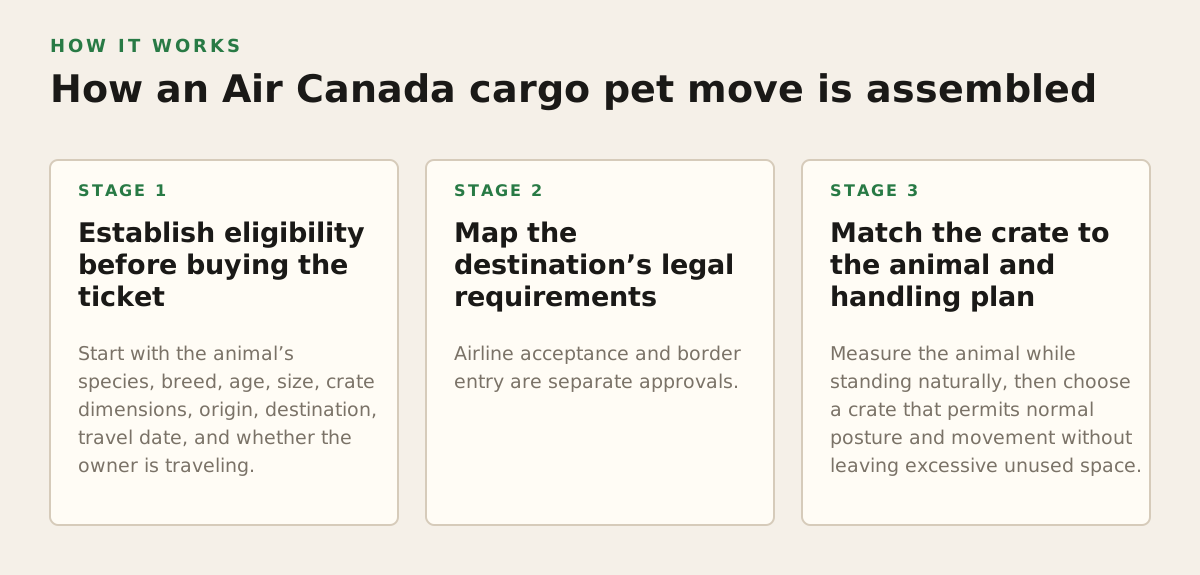
A reliable shipment is built in a sequence. The exact order can vary by origin and destination, but the decision logic remains consistent: establish eligibility, identify the legal import pathway, secure a workable route, prepare the animal and crate, then verify the handoff.
1. Establish eligibility before buying the ticket
Start with the animal’s species, breed, age, size, crate dimensions, origin, destination, travel date, and whether the owner is traveling. Ask Air Canada Cargo whether that specific route and aircraft can accept the shipment. Do not infer cargo acceptance from a passenger booking engine showing open seats.
Some animals may face additional restrictions because of health status, breed characteristics, pregnancy, age, or destination law. A veterinarian can assess fitness for travel, but a health certificate does not override an airline restriction or import prohibition. Record the answer in writing, including any booking deadline, cargo station, and document format.
2. Map the destination’s legal requirements
Airline acceptance and border entry are separate approvals. For dogs entering the United States, the Centers for Disease Control and Prevention maintains the current dog import requirements; those rules can vary based on where the dog has been during the relevant period, vaccination and identification records, and the port-of-entry process. For Canada, the Canadian Food Inspection Agency provides official pet import information.
For international moves, identify which documents are required at each stage:
- Microchip or other permanent identification record, if required by the destination.
- Rabies vaccination evidence and other vaccination records.
- Government-endorsed health certificate, when required.
- Import permit, preapproval, quarantine reservation, or inspection appointment, when required.
- Transit-country documents if the routing passes through another jurisdiction.
- Consignee details that match the person or organization authorized to receive the animal.
Document timing is a dependency, not an administrative afterthought. Some certificates have narrow validity windows, while a vaccination or laboratory test may need to occur weeks or months before arrival. Use the destination authority’s current instructions rather than a generic checklist. If the move involves a military installation, coordinate the host-nation rules with the installation’s veterinary treatment facility or designated pet-import office.
3. Match the crate to the animal and handling plan
Measure the animal while standing naturally, then choose a crate that permits normal posture and movement without leaving excessive unused space. The container must also fit the aircraft and cargo-handling equipment. IATA’s pet travel guidance explains why ventilation, secure fasteners, absorbent material, food and water access, and exterior identification matter.
Prepare the crate as a transport system:
- Use absorbent bedding that will not block ventilation.
- Attach labels with the animal’s name, shipper and consignee contacts, and destination details.
- Provide feeding and watering instructions that a handler can understand quickly.
- Secure doors and fasteners according to the airline’s acceptance instructions.
- Remove collars, harnesses, toys, or other items that could snag or create a handling hazard unless specifically permitted.
Do not sedate an animal simply to make the trip easier. The American Veterinary Medical Association explains in its traveling with your pet FAQ that sedation can affect an animal’s ability to respond to stress and environmental changes. Discuss anxiety, motion sickness, brachycephalic risk, and medical history with the veterinarian well before the departure date.
Where cargo pet plans commonly break
The most expensive problems usually come from mismatched assumptions. A passenger thinks “Air Canada flies there” means “Air Canada Cargo can accept my pet there.” A shipper assumes a health certificate is enough when the destination requires an import permit. A family plans to collect the animal after landing but has not confirmed the cargo facility’s release procedure.
Common failure points and the corrective action
- Wrong booking channel: A passenger reservation is made without a cargo booking. Corrective action: obtain cargo confirmation separately and keep both records together.
- Incomplete destination file: The documents are valid for the airline but not for border entry. Corrective action: compare the file against the destination authority’s current checklist.
- Crate rejected at tender: Dimensions, fasteners, ventilation, or labeling do not meet acceptance instructions. Corrective action: have the crate inspected before the travel date where the carrier permits it.
- Unworkable connection: The pet arrives when the release office or government inspection point is closed. Corrective action: confirm operating hours and build the routing around the handoff.
- Consignee mismatch: The name or phone number on the shipment does not match the person collecting the animal. Corrective action: verify consignee details before the airway document is finalized.
- Seasonal disruption: Heat, cold, weather, or operational changes affect the planned segment. Corrective action: create a rebooking and care-contact plan before tender.
Some failures are not visible until the animal is already at the airport. That is why a professional review should happen before the crate reaches the cargo terminal. For a complex move, request written confirmation of the origin tender location, acceptance window, documents, crate specifications, destination release point, and emergency contact procedure.
How specialists apply the process to real relocations
A practitioner begins with a route-and-risk worksheet rather than a flight number. The worksheet connects the family’s mission to the pet’s legal and operational requirements. It should show who owns each action, the source of the requirement, and the date by which the action must be completed.
For a military PCS, the central issue may be the gap between orders, family flights, housing availability, and host-country import rules. A family can use military pet shipping support to coordinate the animal’s cargo movement with the PCS timeline, especially when the service member’s ticket, pet space, and destination access are not controlled by one booking system.
For an overseas corporate relocation, the priority may be continuity and discretion. The relocation manager should know whether the employee will be available to receive the pet, whether a destination agent can act as consignee, and what happens if the pet arrives before household goods or temporary housing. The lowest-risk plan may use a different travel date from the employee’s flight.
For Hawaii, the owner must treat the state’s entry process as its own project. The Hawaii Department of Agriculture publishes the official animal quarantine information, including current program instructions and forms. A mainland flight reservation does not by itself authorize release at a Hawaii airport. Build the plan around document submission, inspection or release requirements, and the possibility that a missed step changes the animal’s arrival process.
A useful case file contains:
- Animal profile: species, breed, age, weight, medical considerations, identification, and crate measurements.
- Route plan: origin cargo station, each flight segment, connection airport, destination station, and backup routing.
- Compliance file: vaccination records, certificates, permits, endorsements, transit documents, and submission receipts.
- Handoff plan: shipper, cargo contact, consignee, authorized pickup person, veterinarian, and emergency decision-maker.
- Contingency instructions: who can approve a delay, where the animal can be cared for, and how the family will be notified.
Review the file again shortly before departure because airline procedures, government forms, operating hours, and seasonal restrictions can change. In 2026, a page saved from an earlier move is not proof that the same route or document remains acceptable.
What to ask before you commit to cargo
Before paying for a ticket or transferring custody of the animal, obtain clear answers to these questions:
- Is this pet eligible for Air Canada Cargo on the exact date, aircraft, and route?
- Where must the animal be tendered, and during what acceptance window?
- What crate dimensions, construction, labels, and feeding instructions will be accepted?
- Which documents must be presented to Air Canada, and which must be submitted to the destination authority?
- Will a connection require transit documents or a change in consignee arrangements?
- Where will the animal be released, and who may collect it?
- What is the procedure if weather, aircraft changes, or a document issue interrupts the itinerary?
Ask for the answer that is specific to your shipment, not merely a link to a general pet page. A cargo specialist, veterinarian, government pet-import office, or experienced relocation coordinator should be able to identify which requirements are confirmed and which still need verification.
For a family moving to the islands, BestPetTravel can help coordinate Hawaii pet shipping alongside airline and entry planning. For domestic, international, military, and executive relocations, BestPetTravel provides door-to-door pet transportation with airline coordination, paperwork, customs support, live tracking, and delivery logistics; review the available planning support at BestPetTravel.
Authored with NotFair SEO