
Pet Import Requirements Veterinary Appointment Planner: A Route Checklist
October 5, 2026
Use this pet import requirements veterinary appointment planner to map official rules, identify clinic tasks, and check deadlines and records for your route.
Use this pet import requirements veterinary appointment planner by checking the official rules for your pet’s exact route and travel date, then contacting clinics near you to confirm they can complete the listed veterinary tasks and documents. Origin, destination, transit, species, and timing can change what is required. BestPetTravel describes pet transportation, not veterinary appointments; confirm clinic availability, qualifications, and any required government endorsement directly with the clinic and relevant authority.
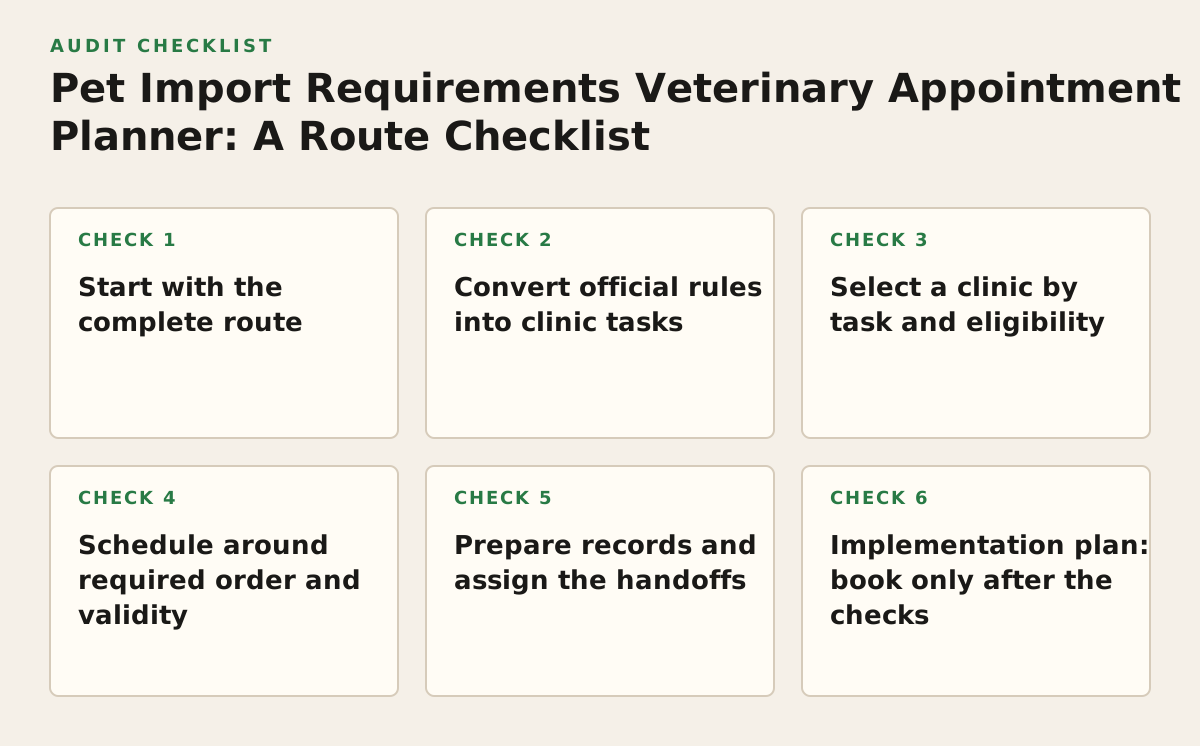
1. Start with the complete route
When it applies: Every move, including a return trip or a relocation with transit stops. Why it works: The applicable checklist may depend on the pet’s origin and travel history, not just the destination. Failure mode: Reusing paperwork or advice from an earlier move without checking whether it applies to this route.
Example: Record your origin, destination, transit countries, species, travel date, and whether your pet travels with you. Then save the relevant government page and check it again before booking. For dogs entering the United States, use the current CDC dog import requirements; for pets leaving the United States, start with USDA APHIS pet travel guidance. A mainland-to-Hawaii move needs Hawaii’s own instructions: check the Hawaii Department of Agriculture animal quarantine information. Owners planning that route can also review Hawaii pet shipping (Hawaii pet shipping).
2. Convert official rules into clinic tasks
When it applies: The destination requires veterinary work or records, such as identification, vaccination, a test, an examination, or a health certificate. Why it works: A task list lets a clinic assess the request before you book, rather than trying to interpret “travel papers” at the appointment. Failure mode: Missing a required step because the request was too vague or because records do not match.
Example: Send the clinic the official checklist and ask it to confirm, task by task, what it can complete and what records it needs. For an EU non-commercial move, the European Commission’s pet movement guidance sets out applicable identification and documentation conditions. Use that page only for routes it covers; check the destination authority for other routes.
Distinguish veterinary work from official approval
A veterinary appointment may not finish the paperwork. Ask who issues or endorses the final certificate and whether it must follow a government process. APHIS explains U.S. pet export certificate processes on its pet travel page. For your route, confirm the current instructions with the issuing authority before treating a clinic signature as final.
3. Select a clinic by task and eligibility
When it applies: Your checklist includes specialized testing, a prescribed certificate, or a veterinarian with a required credential. Why it works: Confirming capability first helps you avoid an appointment that cannot produce a required document. Failure mode: Choosing a clinic based only on proximity or assuming every practice handles international travel paperwork.
Example: Contact clinics you can reasonably reach and ask whether they can complete each named task, review the relevant records, and prepare the certificate in the required format. If the route specifies a credential, ask the clinic to confirm it meets that requirement. Check the clinic’s appointment availability and any limits on what it can do; neither availability nor qualifications should be assumed from a general search result.
For a PCS move, include the move schedule and any known travel constraints in the request, then assign someone to track veterinary and government paperwork separately. The military pet shipping page is relevant to that relocation context (military pet shipping), but confirm veterinary requirements with the appropriate clinic and authority.
4. Schedule around required order and validity
When it applies: The official instructions specify a sequence, waiting period, or time limit for an examination or certificate. Why it works: A route-specific calendar makes it easier to see whether appointments fit the official timing. Failure mode: Booking the final visit based on memory, then finding that a document or step falls outside its permitted window.
Example: Work backward from departure using only deadlines stated by the authority. For each task, record its source, required order, permitted timing, and responsible clinic or agency. The UK government’s guidance for bringing a pet to Great Britain illustrates why travelers should follow the rules for their specific destination and route rather than transplanting another country’s checklist. If a timing instruction is unclear, ask the authority or clinic to clarify it before fixing dates.
Keep the calendar verifiable
Mark uncertain items “verify” rather than guessing. For example, if the rules do not make clear whether a visit must occur inside a specific certificate window, ask the issuing authority which date controls and note the answer alongside the source. Recheck the official page as travel approaches because requirements can change.
5. Prepare records and assign the handoffs
When it applies: Records come from multiple clinics, prior moves, or different people coordinating the relocation. Why it works: A consistent packet helps the veterinarian compare identity and medical records before completing forms. Failure mode: Discovering a missing record or mismatched identification detail after documents have been signed.
Example: Prepare the official checklist, itinerary, identification details, available vaccine and test records, and any required certificate forms. Compare key details—such as a microchip number—across records and flag discrepancies for the clinic to resolve, not guess at.
| Checkpoint | Record | Ready-to-book check |
|---|---|---|
| Route | Origin, destination, transit, travel date | Current official instructions identified |
| Clinic tasks | Each required exam, test, vaccine, or form | Clinic confirms it can handle its assigned tasks |
| Timing | Required sequence and stated validity limits | Proposed dates fit the instructions |
| Handoffs | Issuer, endorsement, submission, originals | A named person tracks each step |
Before leaving the appointment, confirm who submits or endorses each document, which originals are needed, and how completion will be confirmed. Keep copies and check names, dates, destination, and identification details against the official requirements.
Implementation plan: book only after the checks
- Set the route: Write down origin, destination, transit, pet details, and travel date; save the current official rules.
- Build the task list: Separate veterinary work from certificates, endorsements, and other authority steps.
- Contact clinics: Ask about required tasks, credentials, records, and appointment availability before choosing a date.
- Calendar and verify: Enter stated timing rules, assign each handoff, and resolve uncertainties with the clinic or authority.
- Review after the visit: Check completed documents against the route’s official instructions before travel.
BestPetTravel describes door-to-door domestic and international pet transportation, including airline coordination, paperwork, customs support, tracking, and delivery logistics. If transportation coordination is also part of your move, see BestPetTravel (BestPetTravel) and confirm directly whether its current arrangements fit your route; veterinary appointments and official approvals must still be verified with the relevant providers and authorities.
Authored with NotFair SEO