
Pet Import Requirements Permit Application Steps: A Practical Guide for Dogs and Cats
October 3, 2026
Use pet import requirements permit application steps to identify the right authority, assemble documents, meet deadlines, and avoid preventable travel delays.
Use these pet import requirements permit application steps to confirm which authority controls entry, determine whether a permit is needed, submit the correct evidence, and match approval to your pet’s travel date. Start with the destination’s official animal-import rules—not an airline checklist—then coordinate veterinary documents, transit-country rules, and arrival logistics before booking an itinerary you cannot change.
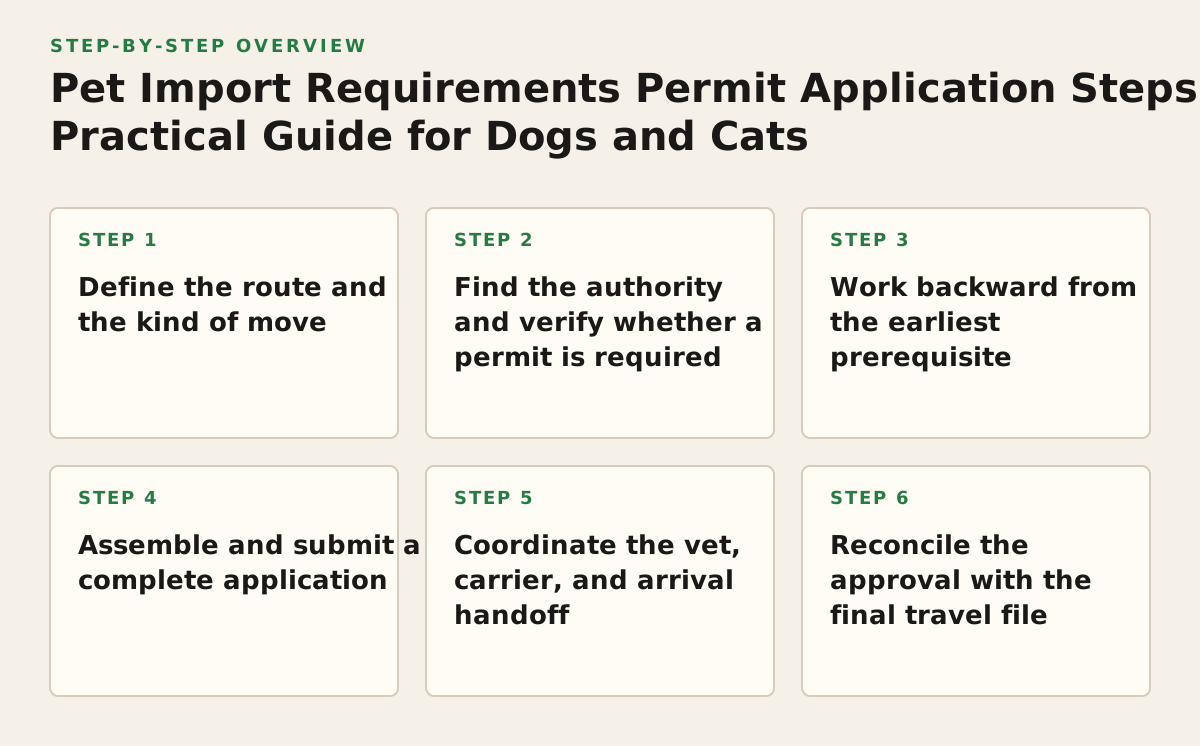
Step 1: Define the route and the kind of move
Write down the destination, departure country, every airport or country where the pet changes planes, and whether the move is personal, commercial, or part of a government or military assignment. Authorities may classify a pet differently depending on whether it travels with its owner, follows separately, or is transferred to another person. That classification can affect the documents and application route.
Record the pet’s species, age, microchip status, vaccination history, and intended arrival date. A dog and cat traveling on the same itinerary may not share the same rules. Likewise, a route through a third country can add transit conditions even when the pet never leaves the airport.
- Destination and transit points: Include connections, not just the final airport.
- Move type: Note whether the pet accompanies the owner or travels separately.
- Pet details: Capture species, identifying information, and current veterinary records.
- Travel constraints: Flag PCS report dates, work start dates, quarantine arrangements, and any fixed delivery address.
For a military move, coordinate the pet plan alongside orders and household shipment decisions; see BestPetTravel’s guide to military pet shipping. If the destination is Hawaii, treat it as a separate regulatory destination rather than assuming domestic travel means ordinary entry rules; the state’s animal quarantine program publishes its own requirements on the Hawaii Department of Agriculture site.
Step 2: Find the authority and verify whether a permit is required
Search the destination government’s animal-health or agriculture site for rules specific to your pet’s species and origin country. Identify the agency that issues the import permit, if one is required, and the agency that checks documents at arrival. These may be different offices. An airline’s acceptance of a pet does not establish that the destination will admit it.
Some destinations rely on health certificates and vaccination records rather than a separate permit; others require advance authorization, an approved route, or an arrival inspection. The U.S. Department of Agriculture’s APHIS guidance directs travelers to requirements for the destination country and notes that rules differ by destination in its pet travel resources. For dogs entering the United States, CDC requirements are a separate set of federal entry rules, and the applicable process depends in part on the dog’s travel history and rabies-risk classification according to CDC guidance.
Build a requirement record, not a bookmark pile
For every rule, save the official page or form, the date you checked it, and the detail that applies to your pet. Record whether the requirement is tied to the country of origin, the pet’s recent travel, or the place of birth. If guidance is unclear, contact the responsible authority in writing and keep its response with the file.
Do not treat a permit as a health certificate. A permit may authorize entry or specify conditions; a veterinarian-issued certificate documents health or vaccination status. The destination may require both, and one does not automatically replace the other.
Step 3: Work backward from the earliest prerequisite
Make a dependency chain before applying. For example, a country may require a microchip to be implanted before a rabies vaccination counts, then require a waiting period or a laboratory result before issuing a certificate or allowing entry. The European Commission’s pet-travel guidance describes identification and rabies-vaccination conditions for covered movements within the EU on its non-commercial movement page. Check the rule that applies to your route rather than assuming those EU conditions govern other destinations.
Use the earliest prerequisite as the planning anchor, not the permit form’s submission date. If a blood test, official endorsement, or original document must come first, applying early for a permit will not make a pet eligible sooner. Ask the authority whether the permit has a validity window and whether a changed flight date requires an amended application.
| Requirement | Evidence to collect | Planning decision |
|---|---|---|
| Identification and vaccination | Microchip record; dated vaccination certificate | Confirm sequence and validity against the destination rule |
| Testing or treatment | Laboratory result or veterinarian record, if required | Schedule before any dependent certificate or permit step |
| Import authorization | Completed application and any supporting documents | Confirm submission channel, processing expectations, and permit validity with the authority |
| Official health document | Destination-required certificate and endorsement, if applicable | Arrange issuance within the required window before travel |
| Arrival arrangements | Inspection, quarantine, or release instructions | Confirm who meets the pet and where documents are presented |
Step 4: Assemble and submit a complete application
Use the destination’s current form and copy pet details exactly from the veterinary record and travel documents. Differences in a microchip digit, owner name, address, or arrival airport can trigger a correction request or make an approval unusable. Submit through the stated channel and retain the receipt, application version, and every attachment.
A practical application packet commonly includes the items below, but only include documents the relevant authority requests. More paperwork is not automatically better if extra or conflicting records create ambiguity.
- Owner or authorized representative’s contact and destination address.
- Pet identification, species, age or date of birth, and microchip details.
- Vaccination and treatment records in the required format.
- Laboratory reports or other test evidence, if required.
- Proposed itinerary, arrival point, and travel date.
- Required veterinarian or government endorsements, if the application asks for them.
Worked example: a family moving with a dog
A family has orders for an overseas assignment and plans to fly with its dog. Before choosing a flight, the relocation coordinator checks the destination rules for the dog’s origin country, asks whether the dog’s route through a connecting country creates a separate condition, and verifies the microchip and rabies record. The authority’s instructions show that a test result is a prerequisite to the final certificate. The family therefore schedules that prerequisite first, submits the permit application with matching identification details, and waits for written authorization before treating the route as cleared.
If the family later changes the arrival airport, it checks whether the permit names a specific port or inspection location. This is the key operational point: approval must match the actual itinerary, not merely the destination country. For a move to Great Britain, the government’s guidance sets out route and document conditions for bringing a pet into the country through its official pet-entry service page; verify the specific rules that apply to the pet and origin.
Step 5: Coordinate the vet, carrier, and arrival handoff
After you understand the authority’s requirements, coordinate veterinary appointments around the required document windows. Ask the veterinarian whether the clinic can issue the destination-specific certificate and whether a government endorsement is also needed. Confirm who submits documents to the authority and who carries originals during travel.
Separately, confirm the airline’s animal acceptance rules, crate specifications, connection handling, and check-in process. These are transport conditions, not import permission. A pet can meet entry rules but still be refused by a carrier for an unsuitable crate or an itinerary the airline will not accept.
Assign one person to own each handoff:
- Veterinary clinic: examination, vaccination records, and required certificates.
- Owner or relocation coordinator: application, itinerary accuracy, and document copies.
- Government authority: permit decision, official endorsement, or arrival instructions.
- Carrier and destination contact: transport acceptance, inspection coordination, and delivery.
For a Hawaii move, confirm the state’s current pathway and required documents before selecting flights; BestPetTravel’s Hawaii pet shipping resource can help organize the transport side. If the pet must be inspected or collected at a designated location, arrange that handoff before departure rather than expecting the airline to resolve entry questions on arrival.
Step 6: Reconcile the approval with the final travel file
When authorization arrives, compare it against the pet’s identity, owner, origin, arrival point, and itinerary. Check any conditions printed on the approval, including validity dates, presentation instructions, and whether originals are required. Save a digital copy, but carry originals whenever the authority or carrier requires them.
Use this final check before the pet leaves:
- Permit or written confirmation is received, if required.
- Names, microchip number, route, and arrival details match across records.
- Vaccination, test, and certificate dates meet the destination’s sequence and validity rules.
- Carrier acceptance and crate requirements are confirmed for every flight segment.
- Arrival inspection, quarantine, pickup, or delivery arrangements have a named owner.
If a flight date, route, owner, or arrival airport changes, pause and ask the issuing authority whether the approval remains valid. Do not infer that a small itinerary change is harmless. For the 2026 move, recheck official rules close to departure because entry conditions and forms can change; keep the date and source page in the travel file.
Start by confirming the destination authority
Your first action is to write the complete route and pet profile, then verify the destination’s official import page for that exact origin, species, and travel type. That check tells you whether a permit exists and which prerequisite controls the schedule; only then should you commit to application timing and veterinary appointments.
BestPetTravel coordinates door-to-door domestic and international pet transport, including airline coordination, paperwork, customs support, live tracking, and delivery logistics. If the move needs that joined-up planning, BestPetTravel can help coordinate the next steps.
Authored with NotFair SEO