
Pet Air Travel Kennel: A Practical Selection and Preparation Guide
September 5, 2026
Pet air travel kennel guide for safer dog and cat flights: choose the right size, prepare for airline rules, and avoid costly travel-day mistakes.
Choosing a pet air travel kennel is not simply a shopping decision. For a military family on PCS orders, an executive relocating overseas, or a household moving to Hawaii, the kennel must work within airline handling procedures, destination import rules, airport security, and the animal’s actual size and behavior. This guide helps you decide which kennel configuration fits the itinerary, identify the information that must be verified before purchase, and build a travel-day process that does not depend on luck.
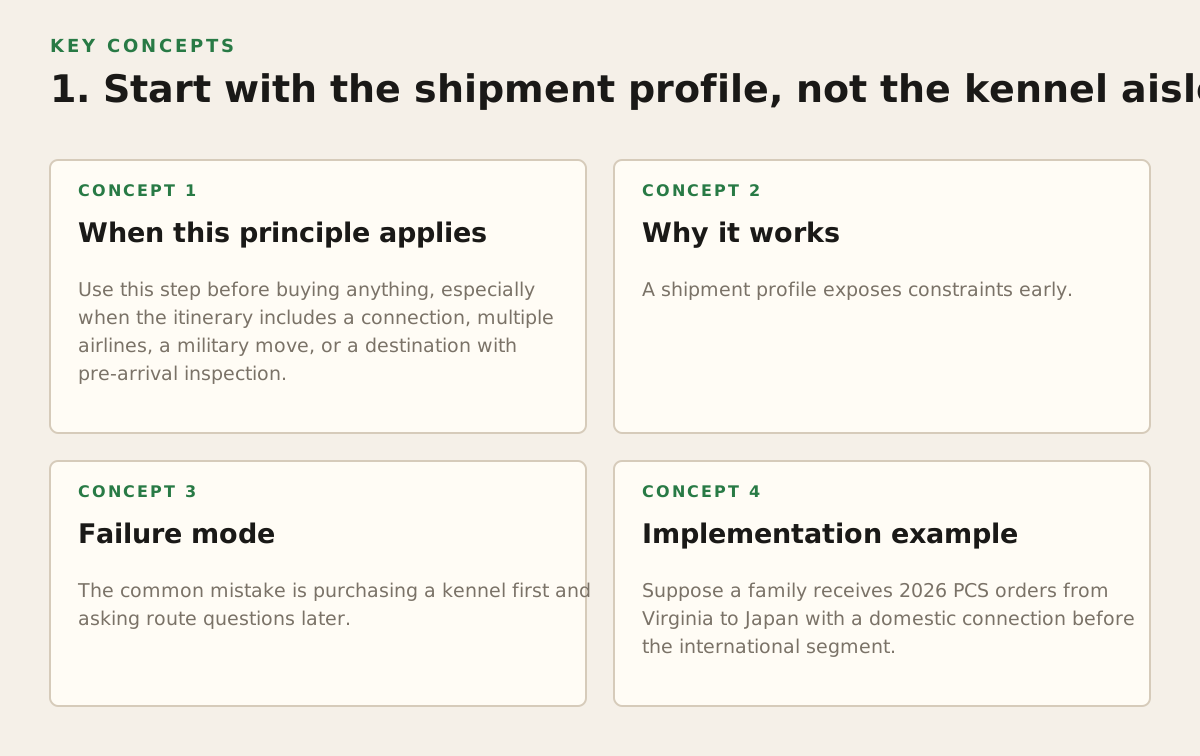
1. Start with the shipment profile, not the kennel aisle
A kennel that works for a short domestic flight may be unsuitable for an international checked journey, an airline cargo booking, or a Hawaii arrival requiring strict document and inspection coordination. Begin by defining how the pet will travel, because that determines which container standards and dimensions matter.
When this principle applies
Use this step before buying anything, especially when the itinerary includes a connection, multiple airlines, a military move, or a destination with pre-arrival inspection. A dog or cat may travel:
- In the cabin, if the airline and fare allow it and the carrier fits under the seat.
- As checked baggage, where available and permitted for that route and aircraft.
- As manifested cargo, with separate acceptance, documentation, and delivery procedures.
- By ground to or from the airport as part of a door-to-door relocation.
These are different operating environments. A soft-sided cabin carrier is not a substitute for a rigid container designed for aircraft hold handling. Likewise, a large rigid kennel that suits a cargo move will not satisfy an under-seat requirement.
Why it works
A shipment profile exposes constraints early. You can ask the airline or transportation coordinator about aircraft type, connection points, seasonal restrictions, acceptance windows, and whether the pet is booked as cabin, checked, or cargo. The International Air Transport Association’s traveler guidance explains that airlines can apply their own conditions and that travelers should confirm requirements with the carrier before travel; its pet travel information is available at IATA’s official pets guidance.
The airline’s acceptance decision controls the trip, not the fact that a kennel is advertised as “airline approved.” That phrase may describe a general design, not acceptance by a particular carrier on a particular route.
Failure mode
The common mistake is purchasing a kennel first and asking route questions later. This can produce a container that is too large for the aircraft hold, too small for the pet to stand naturally, incompatible with the airline’s fasteners, or unsuitable for a connection where the pet must be reprocessed.
Implementation example
Suppose a family receives 2026 PCS orders from Virginia to Japan with a domestic connection before the international segment. Before measuring for a kennel, the family should identify every operating carrier, determine whether the pet will move as cargo or checked baggage on each segment, and ask whether the booking is accepted through to the destination. The kennel decision follows that answer. A relocation provider can coordinate airline acceptance and ground handoffs, while the family concentrates on veterinary and household-move deadlines.
2. Measure the animal in travel posture, then account for handling
Manufacturers often list external kennel dimensions, but the pet’s usable space is determined by the interior. The animal should have room to stand without the head or ears touching the roof, turn around normally, and lie down in a natural position. Large dogs may need a custom or extra-tall solution; compact breeds may need careful interior measurement rather than a guessed weight category.
When this principle applies
Use a fresh measurement whenever the pet has grown, gained weight, developed mobility limitations, or will travel in a different kennel from a previous trip. Measure with the animal standing on a level surface:
- Length from the nose to the base of the tail, then account for the space needed to lie down.
- Height from the floor to the top of the head or highest natural ear position.
- Width across the widest part of the body, including coat if it materially changes clearance.
- Any special needs, such as a brace, limited joint movement, or a long back.
Do not compress a thick-coated dog’s body to make a measurement look smaller. Do not assume a cat that fits in a living-room carrier will tolerate the same interior on a long journey.
Why it works
Comfort and safety depend on usable interior space, ventilation, secure closure, and the pet’s ability to change position. A kennel that is excessively small creates avoidable stress and may be rejected at acceptance. One that is excessively large can permit sliding during handling and may not fit the aircraft or handling equipment. Correct fit is a balance, not a maximum-size contest.
For an international move, compare the measurements against the destination and carrier instructions before ordering. The U.S. Department of Agriculture’s pet travel portal explains that destination requirements vary and should be checked for the specific country and travel circumstances; use the current USDA APHIS pet travel guidance as the starting point for U.S.-origin journeys.
Failure mode
Owners frequently measure the pet’s back while it is sitting, measure only the exterior of an existing kennel, or add a large cushion that reduces headroom. Another error is buying for the pet’s expected adult size when a flight is scheduled soon. The correct question is whether the animal has adequate space on the date of travel and whether the container remains secure.
Implementation example
A 70-pound dog has a shoulder height that fits a standard large kennel, but its ears touch the roof when it stands alert. The owner should not solve this by forcing the dog to lower its head. Instead, the owner can document standing height, ask the carrier about acceptable kennel dimensions, and arrange a test period in a taller approved container. If the larger kennel cannot be accepted on the aircraft, the itinerary—not the dog—may need to change.
3. Treat ventilation, construction, and closure as a system
The best container is not merely strong. It must allow airflow, remain closed during handling, resist escape, and provide a stable base. Evaluate ventilation on multiple sides, door security, fastener design, floor integrity, and whether the kennel can be lifted or moved without the shell flexing dangerously.
When this principle applies
This matters on every flight, but it becomes especially important for cargo travel, hot or cold climates, long airport waits, and itineraries with several handoffs. Examine:
- Vent openings that cannot be blocked by baggage carts, blankets, or the pet’s position.
- A door that latches securely and cannot be pushed open from inside.
- Hardware that can be checked quickly by airline staff without improvised repairs.
- A floor that remains dry and does not allow bedding or absorbent material to obstruct airflow.
- Handles and surfaces that permit safe lifting without placing fingers near the door.
Water access deserves particular attention. Ask the carrier what type of attached dish is accepted and how staff can refill it without opening the kennel. Do not assume a loose bowl placed inside will stay upright during handling.
Why it works
Each feature addresses a different failure: overheating, escape, collapse, leaks, or delayed access. A sturdy shell with poor ventilation is not a safe system. A well-ventilated kennel with a weak latch is not a safe system. Redundancy is useful where it does not interfere with inspection: secure fasteners, clear identification, and a stable water arrangement support the handling chain.
Airline and government rules can also distinguish between a carrier’s general design and an accepted travel configuration. IATA publishes container and animal transport information for travelers, but the operating airline remains the authority for booking-specific acceptance. Review the current guidance at IATA’s official live animals and pets resource and then obtain carrier confirmation for the actual itinerary.
Failure mode
A frequent last-minute workaround is to drill new holes, tape a cracked door, add a homemade latch, or tie a leash inside the kennel. These modifications can create sharp edges, entanglement hazards, or an unacceptable container. A leash attached inside may also catch on the door or ventilation openings.
Implementation example
For a cat flying from Seattle to Honolulu, the owner selects a rigid kennel with ventilation on several sides, a door that closes positively, and an external water dish approved by the carrier. The owner labels the container without covering vents, checks every fastener, and carries spare identification materials separately. The pet’s familiar bedding is trimmed to fit the floor without raising the cat high enough to reduce head clearance.
4. Separate comfort preparation from sedation decisions
A kennel should become a familiar resting place before travel, not a signal that something frightening is about to happen. Behavioral acclimation is the first comfort tool. Medication decisions belong to a veterinarian who knows the animal, the medical history, the route, and the handling conditions.
When this principle applies
Begin as soon as the move is known. This is particularly important for rescue animals, cats that hide during routine appointments, brachycephalic breeds, senior pets, and animals that have never been confined for more than a short car ride.
- Place the open kennel in a familiar room with bedding and treats.
- Feed occasional meals near or inside it without closing the door at first.
- Close the door briefly, then extend the interval gradually while the pet remains calm.
- Practice lifting, carrying, and short vehicle trips in the same kennel.
- Rehearse removal and replacement without chasing the animal.
Avoid making the practice schedule so ambitious that every session ends in panic. Short, repeatable sessions are more useful than one forced day-long confinement before departure.
Why it works
Familiarity reduces the number of new variables on travel day. The pet still faces airport noise, unfamiliar people, and separation, but the kennel itself is a known resting space. The veterinarian can then evaluate whether medication is appropriate rather than using sedation as a substitute for preparation.
For dogs entering the United States, the CDC’s current import guidance includes destination-specific requirements and restrictions that may affect planning; consult the CDC dog importation resource when the itinerary involves entry into the United States. Medical and behavioral advice should come from the attending veterinarian, not from an internet dosage chart.
Failure mode
The dangerous assumption is that a sedative will simply make the flight easier. Medication can alter balance, breathing, temperature regulation, or the animal’s response to stress. Owners also sometimes test a new medication for the first time at the airport, when observation and veterinary support are limited.
Implementation example
A nervous military family dog has eight weeks before an overseas move. The family starts daily kennel meals, adds brief door-closed periods, and schedules a veterinary appointment early enough to discuss anxiety, health records, and the intended route. If medication is prescribed, the family follows the veterinarian’s specific instructions and does not change the dose or combine products without approval.
5. Build the kennel around documents and identification
A correct kennel cannot compensate for incomplete import paperwork. The container should be part of a visible identification and document-control system that helps handlers distinguish the pet, locate the owner, and understand the destination.
When this principle applies
Use this system for all flights, and expand it for international, Hawaii, military, diplomatic, and corporate relocations. Confirm what must be attached to the kennel and what must remain with the traveler or transport coordinator. A working packet may include:
- Pet name, owner name, mobile number, destination address, and emergency contact.
- Origin and destination airport codes, flight details, and connecting-carrier information.
- Veterinary records, identification or microchip information, and required certificates.
- Feeding, watering, and handling instructions that are short and unambiguous.
- Copies of approvals, permits, reservations, and delivery instructions.
Use waterproof sleeves or sealed document pouches where the carrier permits them. Keep duplicate records electronically and in a separate physical bag. Do not attach loose papers where they can cover ventilation or detach during handling.
Why it works
Identification supports the handoff chain, while document control prevents a common administrative failure: the pet arrives before a required approval, inspection, or release step is complete. Requirements are destination-specific. Hawaii’s Animal Industry Division provides official information on quarantine and animal entry procedures at the Hawaii Department of Agriculture animal quarantine resource; owners should use the current instructions rather than rely on a prior trip or a mainland veterinarian’s general assumption.
Documents should be reconciled to the exact itinerary. A certificate prepared for one destination, date, owner, or flight may not satisfy a changed plan.
Failure mode
Owners often place all documents in checked luggage, use a destination address that will not be staffed, or write a phone number that will not work internationally. Another failure is changing flights without checking whether the health certificate, inspection appointment, or import authorization remains valid.
Implementation example
A diplomatic family relocating to Europe creates one master travel record with the pet’s microchip number, vaccination history, owner contacts, flight segments, and receiving representative. The family’s relocation coordinator checks the destination’s current rules and confirms that the veterinary certificate aligns with the booked route. A printed copy travels with the pet, while duplicates remain with the family and coordinator.
6. Design for temperature, connections, and the handoff chain
The kennel operates inside a larger logistics system. A comfortable container at home may become uncomfortable after a delayed check-in, a long ramp wait, or a missed connection. Evaluate the entire journey from door to delivery, not only airborne time.
When this principle applies
This principle is essential for summer and winter moves, long international itineraries, cargo bookings, and any shipment requiring a prearranged airport pickup. It also matters when the pet will be delivered to temporary lodging, base housing, quarantine, or an off-airport inspection point.
Map the following before departure:
- Home pickup time and the pet’s last normal meal and water routine.
- Airport acceptance window and whether the pet waits in a controlled area.
- Connection duration, transfer responsibility, and recovery plan for delays.
- Destination release, customs or inspection steps, and who receives the pet.
- Ground transportation from the airport, including kennel fit in the vehicle.
Weather planning requires current carrier rules and operational judgment. Do not rely on a generic statement that a kennel is “all-season.” Ask how the airline handles temperature restrictions, delays, and rebooking on the route you are using.
Why it works
Most travel-day problems occur at interfaces: owner to airport agent, airline to ground handler, or airport to destination representative. Assigning responsibility at each interface makes omissions visible. A live tracking process can also help a relocation team communicate status, but it does not replace airline confirmation or an in-person receiving plan.
Failure mode
The classic error is booking the shortest itinerary without evaluating the connection. A tight connection may look efficient but leave no recovery margin if the pet and owner are processed separately. The opposite error is choosing an unnecessarily long itinerary with multiple transfers because the fare is lower, without considering additional handling points.
Implementation example
For a family moving from California to Hawaii, the coordinator confirms the airline’s pet acceptance procedure, the receiving party’s availability, and the state entry steps before finalizing the flight. The kennel is labeled with the delivery contact and destination address. If a delay occurs, the family knows who contacts the airline, who monitors the pet’s status, and who receives the animal after release.
7. Use a decision matrix before you purchase or book
When several kennel options appear acceptable, score them against the actual move. The table below is a reusable starting framework, not a substitute for airline or government approval. Mark each item as confirmed, unresolved, or not applicable.
| Decision area | Question to answer | Priority for most moves | Evidence to retain |
|---|---|---|---|
| Travel mode | Is the pet traveling in cabin, checked, or cargo on every segment? | Critical | Carrier confirmation and booking record |
| Interior fit | Can the pet stand, turn, and lie naturally without contact with the roof? | Critical | Current measurements and kennel model |
| Construction | Are the door, fasteners, floor, ventilation, and water setup secure and acceptable? | Critical | Photos, product details, and carrier instructions |
| Destination rules | Are permits, certificates, inspections, or quarantine steps required? | Critical for international and Hawaii moves | Official authority guidance and approvals |
| Acclimation | Has the pet practiced calm confinement, handling, and vehicle travel? | High | Practice schedule and veterinary notes |
| Handoff plan | Who accepts, tracks, and delivers the pet after arrival? | High | Names, phone numbers, and delivery instructions |
| Contingency | What happens after a delay, cancellation, missed connection, or document discrepancy? | High | Written escalation plan |
How to use the matrix
Do not average the scores. A low-cost or convenient kennel cannot offset a critical failure in destination approval or animal fit. Resolve every critical item before booking whenever possible. If one item remains unresolved, identify the person responsible and the date by which it must be closed.
Unresolved critical items are booking blockers. This rule is particularly useful for military families working against report dates, employees coordinating relocation benefits, and professionals managing travel for senior or diplomatic principals.
Failure mode
Teams sometimes treat a checklist as paperwork rather than a decision tool. They mark “kennel purchased” while leaving “airline accepted” blank. That reverses the order of risk: ownership of a container is less important than confirmation that the pet can travel in it on the booked itinerary.
Implementation example
A relocation professional compares two rigid kennels for a cat traveling internationally. Both fit the cat, but one has a water system the carrier will not accept and the other cannot fit the planned ground vehicle. The matrix exposes both issues before payment. The professional either selects a third configuration or changes the transport plan instead of discovering the conflict at airport acceptance.
Implementation plan: execute the kennel decision in sequence
Use the following order for a 2026 move. The dates are a planning sequence, not a universal legal timeline; destination authorities, airlines, and veterinarians may require different lead times.
- Define the route and travel mode. List every operating carrier, airport, connection, and destination handoff. Decide whether the pet is traveling cabin, checked, or cargo on each segment.
- Check official destination requirements. For international travel, review the destination authority and USDA APHIS guidance. For entry into the United States, review current CDC requirements. For Hawaii, use the Hawaii Department of Agriculture’s current instructions.
- Measure the pet. Record standing height, body width, length, weight if relevant to the carrier, and any medical or mobility considerations. Repeat the measurement if the move is several months away.
- Shortlist kennel configurations. Compare usable interior space, ventilation, closure, floor, water access, identification surfaces, and aircraft or vehicle fit. Ignore vague “airline approved” language until the operating carrier confirms acceptance.
- Confirm before purchasing nonrefundable equipment or tickets. Send the carrier the kennel dimensions and travel details when the airline requests them. Ask about temperature restrictions, acceptance windows, connections, and rebooking procedures.
- Start acclimation immediately. Use meals, short closed-door sessions, carrying practice, and vehicle trips. Keep the kennel available as a calm resting place rather than introducing it only on departure day.
- Schedule veterinary and document work. Ask the veterinarian about health suitability, required examinations, identification, certificates, and any medication question. Reconcile certificate dates and route details after the itinerary is finalized.
- Build the handoff packet. Prepare waterproof identification, owner and destination contacts, feeding instructions, flight details, approvals, and duplicate records. Keep documents with the responsible travel team rather than relying on checked luggage.
- Run a final operational review. Confirm airport acceptance, delivery contact, weather-related procedures, connection responsibility, and the delay escalation plan. Photograph the kennel and its contents for the travel record.
- Assign one accountable coordinator. On travel day, one person should own communication among the family, airline, ground handler, veterinarian, and destination receiver. That prevents conflicting instructions during a delay.
For complex moves, professional coordination can reduce the number of unmanaged handoffs. BestPetTravel provides door-to-door domestic and international pet transportation, including airline coordination, paperwork, customs support, live tracking, and delivery logistics. Families planning military pet shipping or Hawaii pet shipping can use the service to coordinate the kennel decision with the wider relocation plan; learn more through BestPetTravel.
Authored with NotFair SEO