
Pet Air Travel Cabin Versus Cargo Comparison: Choosing the Right Option for a Relocation
October 2, 2026
Use this pet air travel cabin versus cargo comparison to weigh airline rules, pet size, route limits, health needs, and paperwork before booking.
The pet air travel cabin versus cargo comparison comes down to whether your pet and itinerary meet an airline’s cabin rules—and whether a separate hold or cargo booking can safely and legally carry them instead. Cabin travel is usually the simpler choice for a pet small enough to remain in an approved carrier under the seat, but it is not automatically available or best. For larger pets, restricted routes, or complex relocations, cargo may be necessary; the right choice depends on the aircraft, airline policy, animal’s needs, and destination requirements.
What “cabin” and “cargo” actually mean
Cabin travel means the pet travels with a passenger, generally in a carrier that stays under the seat for the flight. The airline sets the carrier’s permitted dimensions, pet eligibility, reservation process, and any limits on the number of animals in the cabin. A pet may not occupy a seat or be removed from its carrier simply because the passenger prefers it.
“Cargo” is less precise. It can mean a pet accepted as checked baggage and carried in an aircraft hold, or a pet shipped as manifest cargo through an airline’s cargo operation. Those are different services, with different booking, handoff, and collection processes. Some carriers or itineraries offer only one of them—or neither. Check the operating airline’s current rules rather than assuming that a ticketed passenger can check a pet.
For either hold option, the aircraft and carrier must be appropriate for the animal and flight. The International Air Transport Association’s Live Animals Regulations overview describes the standards used in air transport for live animals, including container and handling considerations. That framework does not guarantee that a particular airline accepts a pet on a particular flight; airline acceptance rules still control.
Do not treat “cargo” as one universal cabin alternative. Before comparing comfort or convenience, establish whether the actual itinerary permits in-cabin travel, checked-pet service, or manifest cargo—and which party is responsible for each handoff.
Why the choice matters beyond pet size
Size often determines eligibility, but route and airline rules can decide the case. A pet that fits an airline’s cabin carrier on one aircraft may not fit the under-seat space on another. A connection can introduce a different operating carrier, terminal, or rule set. A nonstop route may also be preferable if a transfer would require an additional check-in, cargo handoff, or longer period in transit.
Health and behavior matter too. A pet must tolerate the relevant confinement, movement, noise, and handling. Ask the veterinarian who knows the animal whether its age, health, or anxiety changes the travel plan; an airline’s acceptance is not a veterinary assessment. The American Veterinary Medical Association’s traveling with your pet guidance recommends discussing travel with a veterinarian and preparing the animal for its carrier. Do not assume that cabin access eliminates stress, or that cargo is unsuitable for every animal.
For international moves, destination entry rules are separate from airline acceptance. A pet can be allowed on a flight but still lack the required documents, vaccinations, tests, permits, or arrival arrangements. The U.S. Department of Agriculture’s pet travel guidance directs owners to destination-specific requirements for pets leaving the United States. For dogs entering the United States, review the current CDC dog import requirements; requirements depend on the dog’s circumstances and travel history.
- Pet and carrier: Is the animal eligible for the cabin, and does the carrier meet the operating airline’s measurements?
- Every flight segment: Who operates each leg, and does that airline accept the pet in the selected travel category?
- Destination: What entry documents and advance steps apply to this pet and itinerary?
- Handoff: Who checks the pet in, receives it at arrival, and handles a disruption or missed connection?
For PCS orders, the choice can affect the family’s travel sequence, ground transport, and arrival plans—not just the pet’s ticket. BestPetTravel’s military pet shipping information is relevant when airline coordination and relocation logistics need to fit a move schedule. For island moves, review Hawaii pet shipping planning early: airline booking does not replace the separate preparation needed for Hawaii’s animal-entry process.
How to compare and book the options
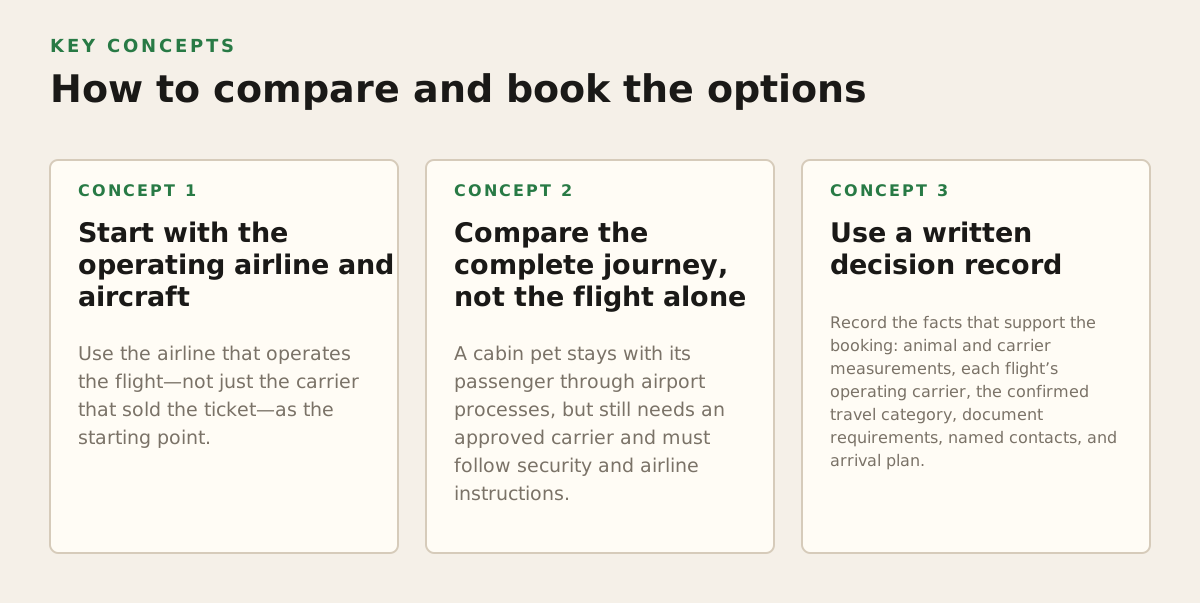
Start with the operating airline and aircraft
Use the airline that operates the flight—not just the carrier that sold the ticket—as the starting point. Look up its current pet policy, then confirm the rule for each segment with the airline before paying for a nonrefundable itinerary. Official pages such as Delta’s pet travel overview and American Airlines’ pets information illustrate why travelers should check carrier-specific acceptance and booking conditions rather than apply one airline’s rules to another.
Ask the airline to confirm the pet’s category, carrier requirements, availability, and any required booking step. If an itinerary includes a partner or codeshare flight, get confirmation for the operating carrier as well. Save the response and the policy details you relied on. A reservation note is not a substitute for completing the airline’s required pet booking.
Compare the complete journey, not the flight alone
A cabin pet stays with its passenger through airport processes, but still needs an approved carrier and must follow security and airline instructions. A hold or cargo shipment may require a separate acceptance location, check-in window, paperwork review, or arrival collection. Those steps can make cargo less convenient even where the flight itself is direct. Conversely, cargo arrangements may be the practical option when the pet cannot travel in the cabin or when an airline does not offer another suitable service.
Build the comparison around door-to-door handling. Map the journey from home to final destination: ground transport, airport arrival, airline acceptance, flight, arrival release, customs or inspection, and onward delivery. For international moves, confirm who will present documents and who can act if the pet arrives before its owner.
Use a written decision record
Record the facts that support the booking: animal and carrier measurements, each flight’s operating carrier, the confirmed travel category, document requirements, named contacts, and arrival plan. This gives a family, relocation manager, or veterinarian a shared reference when a schedule changes. It also exposes a common gap: a plan may be valid for the outbound flight but not for a return leg, connection, or later aircraft substitution.
- Illustrative small-cat case: A 4 kg cat with a 1 kg carrier appears cabin-sized, but the combined weight and carrier dimensions must still satisfy the specific airline’s rules. Confirm the under-seat fit for every segment.
- Illustrative large-dog case: A 28 kg dog cannot use a cabin carrier under the seat. Check whether the route and airline accept the dog as checked baggage or manifest cargo, and verify the required kennel and acceptance process.
- Illustrative connecting itinerary: A family books two flights on separate operating airlines. Confirm acceptance on both legs before purchase; approval for the first segment does not establish acceptance for the second.
- Illustrative overseas move: A pet is accepted for air carriage, but a required destination document is missing. Airline acceptance alone does not authorize entry, so resolve the import steps before setting the travel date.
These weights and situations are illustrative examples, not eligibility thresholds. Airline limits, carrier dimensions, aircraft configuration, and destination rules vary; use the rules that apply to the specific booking.
Where a sound plan can break
Availability is not the same as policy eligibility. A pet may meet the published criteria but still need advance confirmation or a limited pet space on the flight. Airlines can also restrict animals by route, aircraft, season, or operational condition. Do not treat a general policy page as proof that space is reserved for a particular pet.
Common failure points include:
- Carrier mismatch: The pet carrier is too large for the assigned cabin space, or a hold kennel does not meet the airline’s stated specifications.
- Unconfirmed segment: A partner airline, aircraft change, or connection has a different acceptance rule.
- Incomplete import preparation: A certificate, permit, test, or timing requirement is missing, even though the flight reservation is valid.
- Unclear arrival responsibility: No one is assigned to collect the pet, meet a cargo release deadline, or coordinate inspection and onward transport.
- Late change: A schedule or aircraft change invalidates an assumption about carrier fit, connection time, or the service available for the pet.
Build a contingency plan before departure: identify whom to call, what happens if the pet is not accepted, and whether the traveler can change flights without separating the family from the animal for an extended period. Do not medicate a pet to make air travel manageable unless a veterinarian specifically advises it; ask about the individual animal and the proposed travel conditions.
Reconfirm when the itinerary changes. A new flight number or operating carrier is a reason to verify acceptance again, not merely to update the passenger’s calendar. Keep copies of the airline confirmation and destination paperwork accessible to the person accompanying or receiving the pet.
Apply the comparison to the relocation decision
For a pet that meets cabin rules and has confirmed space on every segment, cabin travel can keep the animal with its passenger and simplify the handoff. For a larger pet, a route without cabin acceptance, or a move requiring a separate transport plan, compare checked baggage and manifest cargo only where those services are actually offered. Neither label by itself establishes which option is safer for an individual animal.
Use this order of operations:
- Get the destination requirements first so the travel date leaves room for required preparation.
- Match the animal to an airline-approved travel category and confirm the specific operating flights.
- Ask the veterinarian about fitness and preparation for the animal’s health and temperament.
- Assign each logistics handoff from home departure through final delivery, including disruption contacts.
If any one of those checks is unresolved, pause before committing to a flight that cannot be changed easily. A relocation coordinator can help connect airline confirmation, paperwork, customs steps, tracking, and delivery planning without treating them as separate jobs. BestPetTravel can support families and relocation teams arranging domestic or international pet transport, including airline coordination and door-to-door logistics.
Authored with NotFair SEO