
International Pet Transport: A Practical Guide for Safe Global Relocation
September 22, 2026
International pet transport explained: plan airline coordination, health documents, customs, and delivery for military, family, and executive moves.
International pet transport is the coordinated movement of a dog or cat across borders, covering destination-country rules, veterinary documents, airline acceptance, customs clearance, and final delivery. For a military PCS, overseas job transfer, diplomatic assignment, or family move, the safest approach is to treat the pet’s journey as a regulated logistics project—not simply as buying an airline ticket. Start by identifying the destination’s import rules, then work backward from the required veterinary dates, flight availability, and arrival procedures.
What International Pet Transport includes
A cross-border pet move has several connected parts. A pet may be healthy and fully documented yet still be refused because the airline has no suitable crate space, the connection exceeds an airline’s acceptance conditions, or a required document is missing an official endorsement. Conversely, a compliant itinerary can fail operationally if the pet is booked on a route with extreme temperatures, a long tarmac exposure, or an airport that does not process live animals.
The practical definition is therefore broader than pet shipping. It includes regulatory compliance, airline coordination, airport and customs handling, and last-mile delivery. Depending on the route, the service may also involve import permits, laboratory testing, quarantine arrangements, transit permissions, and local registration.
The four handoffs that determine success
- Veterinary preparation: identification, vaccinations, examinations, tests, certificates, and any destination-specific treatments.
- Airline acceptance: an airline-approved crate, reservation or cargo booking, route review, and confirmation that the aircraft and connection can carry the animal.
- Border entry: document inspection, customs or agricultural clearance, fees where applicable, and release from the arrival facility.
- Delivery: transfer from the airport to the residence, military lodging, quarantine site, or another approved destination.
These handoffs are interdependent. A rabies vaccination completed on the wrong date may invalidate an otherwise complete application. A flight change can create a new transit-country requirement. A family that moves into temporary housing may need delivery to a boarding facility first, followed by a second transfer once the permanent address is available.
Why the route matters as much as the destination
Import rules usually focus on the destination, but the route introduces additional constraints. A dog traveling from the United States to an overseas posting may pass through another country, change airlines, or enter through an airport with a particular animal-handling process. The itinerary should be evaluated for transit requirements, temperature exposure, and connection control before any nonrefundable arrangements are made.
IATA publishes operational guidance for the air transport of live animals, including container and handling considerations, through its official pets and live animals guidance. That guidance does not replace a carrier’s own acceptance rules, so the airline’s written confirmation remains important for the specific aircraft, route, and travel date.
Why international moves require more planning
Domestic pet travel often centers on airline rules and a health certificate. International transport adds a legal question: will the destination government admit this specific animal on this specific date? The answer can depend on the pet’s species, age, microchip sequence, vaccination history, country of departure, transit countries, and whether the animal is traveling with its owner.
For travel from the United States, the USDA Animal and Plant Health Inspection Service directs owners to destination-specific requirements and explains that some countries require a USDA-accredited veterinarian to complete documents followed by official endorsement. The current starting point is the USDA APHIS pet travel portal. Requirements should be checked for the actual destination and reviewed again before departure because government rules and forms can change.
The timing problem
Many requirements are date-sensitive rather than merely document-sensitive. A microchip may need to be recorded before a rabies vaccination. A waiting period may begin only after a qualifying vaccination. A blood test may need to be performed within a particular window, followed by a waiting period before entry. A health certificate may be valid for a limited number of days, and an official endorsement may be required after the veterinarian signs it.
That creates a planning sequence rather than a checklist completed at the end. A relocation coordinator should map each event backward from the intended arrival date:
- Confirm the destination’s current entry rules and the permitted entry airport.
- Verify the microchip and vaccination records with the veterinarian.
- Schedule tests, treatments, and any waiting period required by the destination.
- Reserve an itinerary that fits the document validity window.
- Complete the final examination and endorsement steps close enough to travel, but with time to correct an error.
As an illustrative planning policy—not a universal legal deadline—an owner could create a document review at 90 days, a route and crate review at 60 days, and a final paperwork audit at 14 days before departure. The actual schedule must come from the destination authority, veterinarian, airline, and any applicable military or employer travel policy.
Species, age, and special circumstances change the answer
Dogs and cats are not always treated identically. Puppies and kittens may be too young for a required vaccination or too young to meet a destination’s entry conditions. Brachycephalic breeds can face carrier restrictions because of respiratory risk. Large dogs may need cargo handling because they cannot travel in the cabin or under the seat. A service animal may have different airline procedures, but it still may need to meet the destination’s import rules.
For dogs entering the United States, the Centers for Disease Control and Prevention maintains separate requirements based in part on the dog’s recent travel history and rabies-risk classification. Owners should use the CDC dog importation guidance rather than assuming that a prior U.S. vaccination record alone is sufficient. Cats, birds, rabbits, reptiles, and other species may fall under different federal, state, or destination rules.
How a compliant move is built
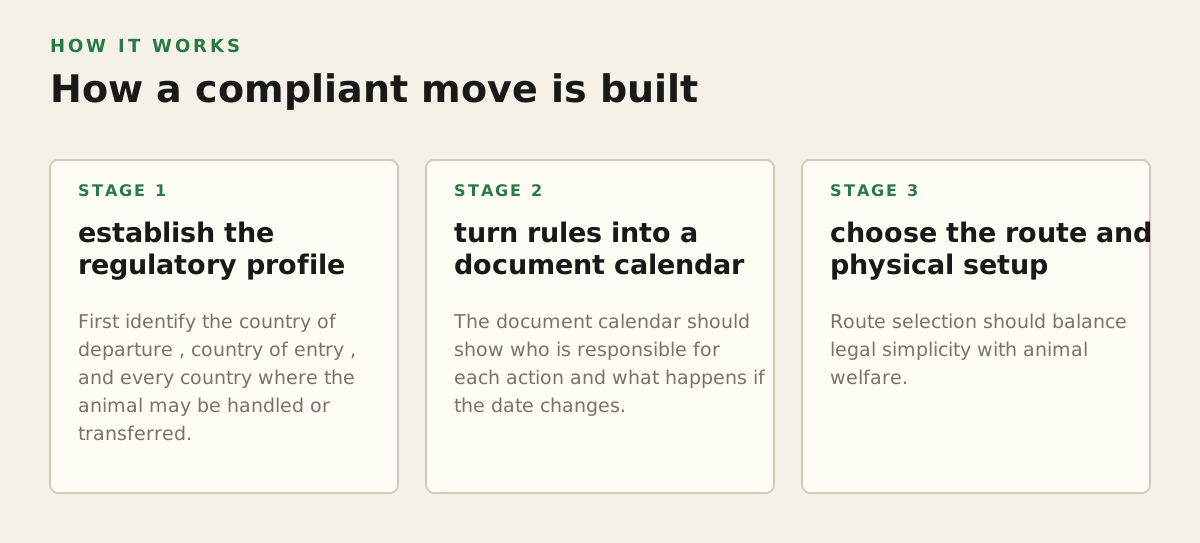
A reliable plan begins with an intake that captures facts affecting admissibility and handling. The coordinator needs more than the pet’s name and weight. Useful details include the microchip number, vaccination dates, country history, breed, age, crate dimensions, medical needs, owner itinerary, destination address, and whether the pet will travel with the owner or separately.
Step 1: establish the regulatory profile
First identify the country of departure, country of entry, and every country where the animal may be handled or transferred. Then determine whether the movement is classified as personal travel, commercial movement, importation, or another category. The classification can affect forms, health certificates, and the permitted timing between the pet’s travel and the owner’s travel.
For moves into the European Union, the European Commission’s official EU legislation page for the movement of pets explains the framework for non-commercial movement and related requirements. A move to an EU country should still be checked against the current national entry process and the pet’s origin country, especially when the animal comes from outside the EU.
Step 2: turn rules into a document calendar
The document calendar should show who is responsible for each action and what happens if the date changes. A veterinarian may provide the examination and medical records; a government authority may endorse a certificate; an airline may require a booking reference and crate measurements; a customs broker or local agent may need copies before arrival.
- Identity record: confirm the microchip number matches the medical file and every application.
- Medical record: reconcile rabies, other vaccinations, treatments, tests, and examination dates.
- Government paperwork: identify permits, endorsed certificates, declarations, and destination forms.
- Operational file: keep the itinerary, crate details, emergency contacts, and delivery instructions together.
Use the same spelling of the owner’s name, pet’s name, microchip number, and destination address throughout the file. A small discrepancy can trigger manual review at a border checkpoint. Digital copies are useful for coordination, but they do not automatically replace original or endorsed documents when an authority or airline requires paper originals.
Step 3: choose the route and physical setup
Route selection should balance legal simplicity with animal welfare. A nonstop flight can reduce handling points, but it may not exist from the departure airport or may operate only on certain dates. One connection may be reasonable when it occurs at an experienced hub with adequate transfer time. Multiple connections increase the number of operational points that can disrupt the plan.
The crate must allow the pet to stand, turn, and lie naturally, while remaining secure and compatible with the airline’s requirements. Measure the pet and the crate together rather than relying on a breed label or a previous domestic flight. Add absorbent bedding and familiar, safe items only if the carrier permits them. Sedation should never be treated as a routine solution; the owner should discuss any medication with the veterinarian and disclose it as required.
Build a contingency plan for weather restrictions, flight cancellation, and document correction. The plan might identify an alternate departure date, a temporary boarding provider, a local representative authorized to receive the pet, and instructions for a missed connection. A contingency is useful only if the people responsible for activating it are named and reachable.
Where International Pet Transport breaks
Most serious failures occur at the boundaries between systems: veterinary medicine and government paperwork, airline reservations and airport handling, or arrival clearance and ground delivery. Finding the weak handoff early is more valuable than adding generic preparation tasks.
Common documentation failures
- Microchip mismatch: the number on the certificate does not match the number read by the veterinarian or border officer.
- Invalid timing: a vaccination, test, treatment, or certificate falls outside the destination’s permitted window.
- Missing endorsement: the veterinarian signs the form, but the destination requires official government endorsement as well.
- Wrong form version: an outdated document is used after the destination authority changes its process.
- Incomplete origin history: the file does not establish where the pet has been during the period relevant to entry rules.
Do not solve these problems by editing a signed certificate yourself. Ask the issuing veterinarian or authority how the correction must be made, and preserve a clear record of the replacement document. If a rule is ambiguous, obtain written clarification from the relevant government office or its designated import contact.
Operational failures after the paperwork is complete
A compliant file cannot compensate for an unsuitable itinerary. A connection may be technically legal but operationally poor if the pet must be unloaded outdoors during extreme heat, if the receiving facility closes before arrival, or if the final destination is several hours from the airport with no confirmed vehicle.
For military families, orders can change after the pet booking is made. For executives and diplomatic families, arrival times may shift because of official schedules or housing delays. For Hawaii moves, the state’s separate animal import process can affect timing and entry location. The Hawaii Department of Agriculture provides its current animal quarantine and import information through its Animal Quarantine Station resource; Hawaii should not be treated as an ordinary domestic destination.
Use a written escalation plan that answers four questions:
- Who can authorize a rebooking if the flight is canceled?
- Where will the pet stay if the residence is unavailable?
- Who can receive the pet if the owner is delayed?
- Which original documents must remain with the animal or be presented at clearance?
These decisions are especially important for a pet traveling separately from its owner. The owner should confirm whether the chosen movement qualifies for the intended entry category and whether a representative can complete arrival procedures.
How practitioners apply the process to real relocations
The right workflow depends on the move’s constraints. The same airline and destination can require different handling for a small cat traveling with a spouse, two large dogs moving ahead of a PCS family, or a senior dog accompanying an executive to temporary housing.
Military PCS example
Consider a family receiving overseas orders with two dogs, one of which is too large for cabin travel. The first decision is not the flight; it is whether the destination’s veterinary and entry schedule can be completed before the family’s report date. The coordinator can then align the pet itinerary with the family’s passenger booking, identify a receiving party if the service member must report first, and preserve copies of orders if they affect government or airline procedures.
Military families can review the separate service and carrier requirements while arranging military pet shipping. A useful starting file contains the orders, pet records, destination address or lodging plan, crate measurements, and a named alternate receiver.
International family relocation example
Suppose a family is moving with one cat and one small dog, but the permanent home will not be ready for several weeks. The transport plan should separate border entry from final delivery. The pets may need to clear customs at the arrival airport, then travel to approved temporary boarding or family accommodation. The delivery address should be updated only after the receiving facility confirms it can accept the animals.
For a move involving an island jurisdiction, review the entry process independently from the international flight plan. Families planning Hawaii pet shipping should confirm the state’s current document, inspection, and release procedures early, because an airline booking alone does not establish permission to enter.
Executive or diplomatic relocation example
A discreet move may require coordination among a household manager, veterinarian, employer, security team, and receiving residence. The practical requirement is not secrecy from authorities; it is controlled communication and a clear chain of custody. Share only the information each participant needs, while ensuring that customs, veterinary, and airline officials receive complete and accurate documents.
For any high-consequence move, request written confirmation of the parts most likely to be misunderstood: the accepted crate specification, booking status, arrival procedure, document validity, and delivery handoff. Keep one person accountable for the master timeline. Multiple well-intentioned coordinators can otherwise create conflicting instructions.
What to ask before appointing a transport coordinator
- Which party verifies destination-country requirements, and on what date will they be rechecked?
- Who coordinates the veterinarian, government endorsement, airline, customs contact, and delivery provider?
- What is the process if the airline changes the itinerary or the destination address is unavailable?
- Will the owner receive copies of the final documents and a written handoff plan?
- Which responsibilities remain with the owner, veterinarian, airline, or government agency?
International pet transport is best managed as a chain of verified decisions: admissibility first, medical timing second, airline acceptance third, and delivery logistics throughout. Before committing to a date, have the route, documents, crate, receiving location, and contingency contact reviewed as one plan. BestPetTravel provides door-to-door domestic and international pet transportation with airline coordination, paperwork, customs support, live tracking, and delivery logistics; BestPetTravel is a practical next step when the move spans several providers or jurisdictions.
Authored with NotFair SEO