
International Pet Shipping: A Practical Guide for Safe, Compliant Relocation
September 9, 2026
Plan international pet shipping with a clear look at documents, airline rules, customs, timing, risks, and support for military and family moves.
International pet shipping is the coordinated movement of a dog or cat across national borders, including veterinary preparation, government paperwork, airline arrangements, customs clearance, and final delivery. It is not simply buying an airline ticket for an animal: the destination’s import rules, the animal’s health status, the route, and the carrier’s operating requirements must all align on the travel date.
What International Pet Shipping Actually Includes
A successful relocation has several separate workstreams. Treating them as one task—“get the pet on a plane”—creates gaps because each party controls a different part of the journey. The veterinarian confirms medical readiness. Government authorities define import eligibility. The airline controls acceptance and aircraft-specific limitations. Customs or an animal quarantine office determines whether the pet can be released. A transportation provider coordinates those handoffs.
The four layers of a compliant move
1. Eligibility means confirming that the animal, origin, destination, and proposed route are allowed. Some countries distinguish between dogs and cats, impose additional rules on young animals, or apply special conditions to animals arriving from countries with particular disease risks.
2. Veterinary preparation covers identification, vaccinations, laboratory work when required, parasite treatments, and health certification. The exact sequence matters. A vaccination given after a required microchip, for example, may be treated differently from one given before identification under a destination’s rules. The veterinarian should work from the current official destination requirements rather than a generic checklist.
3. Transport execution includes the crate, airport handoff, airline acceptance, connection planning, and tracking. The most convenient passenger itinerary is not automatically the best animal itinerary. A routing with fewer transfers may reduce handling exposure, while a cargo routing may be necessary when the pet cannot travel in the cabin or as checked baggage.
4. Border release and delivery begins after landing. Depending on the destination, the pet may pass through customs, an agricultural inspection, an animal quarantine facility, or a designated airport process before delivery. A driver waiting outside the terminal cannot solve a missing import permit or an incorrect health certificate.
The U.S. Department of Agriculture’s Animal and Plant Health Inspection Service explains that pet travel requirements vary by destination and that owners should check the destination country’s requirements before travel; its official pet travel hub is a useful starting point, not a substitute for destination-specific review. USDA APHIS pet travel guidance
What is being shipped?
“Pet” is not a sufficient planning description. A carrier, veterinarian, or government office will need details such as:
- Species, breed, age, sex, weight, and reproductive status.
- Microchip number and the date it was implanted or read.
- Vaccination history, especially rabies history and certificate dates.
- Origin address, destination address, and the owner’s travel dates.
- Whether the animal is traveling with its owner, separately, or as part of an official relocation.
- Medical conditions, behavior concerns, mobility limitations, or medication requirements.
- Crate dimensions and the intended airline, route, and connection points.
These details are operational inputs, not administrative trivia. A brachycephalic dog may face airline restrictions that do not apply to a Labrador. A very large kennel may eliminate an aircraft type. A military family’s orders may establish a firm reporting date, while an executive relocation may require discreet door-to-door coordination around a temporary residence.
Why the Planning Standard Matters
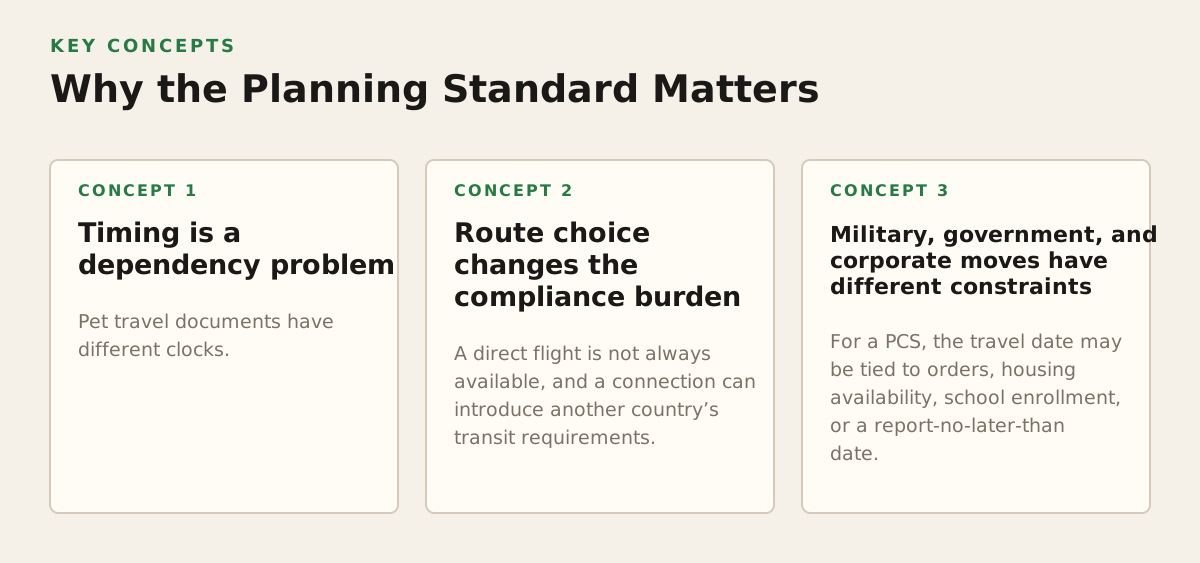
The main risk in an international move is not usually one dramatic event. It is a chain of small mismatches: a certificate issued outside the permitted window, a transit country with an unreviewed rule, a kennel that does not fit the aircraft, or a delivery plan that assumes the pet is released immediately.
Timing is a dependency problem
Pet travel documents have different clocks. A microchip may need to exist before a vaccination. A blood test, if required, may create a waiting period. An official endorsement may be available only after a veterinarian completes the certificate. An import permit may expire. The airline reservation may be changeable, while the government paperwork is not.
Build a dependency calendar rather than one departure date. For each requirement, record:
- The action, such as vaccination, blood draw, permit application, or health examination.
- The earliest date it can occur.
- The latest date it remains valid for the intended arrival.
- The person responsible for completing it.
- The evidence required, such as a certificate, receipt, laboratory report, or approval number.
- The consequence if it is late or incorrect.
As an illustrative planning policy—not a universal rule—a family could use separate checkpoints at 120, 90, 60, 30, 14, and 3 days before departure. The actual intervals must come from the destination authority and the airline. The point is to expose dependencies early enough to change the route or travel date before an irreversible document window is missed.
Route choice changes the compliance burden
A direct flight is not always available, and a connection can introduce another country’s transit requirements. Even when an animal remains airside, the routing should be reviewed for transit restrictions, terminal changes, aircraft limitations, and the possibility of an overnight delay.
Route resilience means asking what happens when the planned itinerary fails. Consider:
- What happens if the first flight is delayed and the connection is missed?
- Can the airline accept the animal on the next aircraft, or does the pet need a new booking?
- Will the destination still accept the paperwork if arrival moves to the next day?
- Is there a safe, authorized location for the pet during a long disruption?
- Who can approve a reroute without losing track of the animal or documents?
The International Air Transport Association publishes official guidance for transporting live animals and notes that airline acceptance, container, and handling requirements must be considered alongside government rules. Its Live Animals Regulations are a carrier and industry reference; they do not replace the importing country’s law. IATA guidance on transporting pets
Military, government, and corporate moves have different constraints
For a PCS, the travel date may be tied to orders, housing availability, school enrollment, or a report-no-later-than date. A pet plan should therefore include a fallback arrival window and a temporary care option. The military pet shipping process may involve coordinating with the family’s official travel, reimbursement documentation, and a destination-side delivery schedule.
For diplomatic or government families, the practical requirement may be discreet coordination rather than public visibility. That means limiting unnecessary disclosure, confirming who is authorized to receive documents, and ensuring the delivery team knows the correct residence or mission contact. Corporate relocations often have a similar issue when the employee is in temporary housing and the permanent address is not yet available.
How the Process Works From Intake to Delivery
A professional move should be managed as a sequence of gates. Each gate has an owner and a decision. If a requirement is still uncertain, the move is not ready for final airline confirmation, even if a tentative itinerary exists.
Gate 1: Intake and destination review
Start with a written intake. Gather the animal’s records, the origin and destination, the owner’s travel details, and any constraints. Then verify the destination’s rules through official sources or a qualified local authority. Do not rely on a previous move to the same country: rules can differ by origin country, species, age, vaccination status, and arrival method.
For dogs entering the United States, the Centers for Disease Control and Prevention maintains a current importation resource covering requirements that can vary according to the dog’s recent travel history and rabies-risk circumstances. CDC dog importation requirements A cat traveling to the United States follows a different analysis, and a dog traveling onward through another country may face additional transit conditions.
Gate 2: Veterinary record reconciliation
Have the veterinarian compare the existing record against the destination checklist. The goal is not to administer every conceivable treatment; it is to identify the specific evidence the destination requires and make the record internally consistent.
Common reconciliation questions include:
- Does the microchip number match across the vaccination record, health certificate, and application?
- Is the rabies vaccine valid on the date of entry, not merely on the date of administration?
- Does the destination require an accredited or government-authorized veterinarian to issue or endorse the certificate?
- Are translations, laboratory reports, or original signatures required?
- Does the animal’s age or medical condition change eligibility?
Keep originals and controlled copies. A scan is useful for review and recovery, but a destination may require an original certificate, a specific endorsement, or a document presented in a particular format.
Gate 3: Airline and crate planning
The airline booking should be confirmed only after the animal’s size, crate, route, and expected conditions have been reviewed. Airline policies may restrict breeds, temperatures, aircraft types, seasonal acceptance, or the use of particular travel channels.
Crate selection is a fit calculation, not a purchase based solely on the pet’s weight. The animal should be able to stand naturally, turn around, and lie in a normal position while the crate remains secure and ventilated. The external dimensions also need to fit the aircraft’s cargo compartment and handling equipment. Ask the carrier whether water containers, absorbent material, fasteners, and labeling meet its current specifications.
For a large dog, the practical choice may be between a less convenient routing on an aircraft that accepts the crate and a faster routing that cannot. For a cat, a cabin option may exist on one airline but not another, subject to carrier rules and the owner’s itinerary. Neither option should be assumed until the airline confirms it.
Gate 4: Reservations, documents, and handoffs
The transport plan should identify each handoff: home pickup, veterinary or airport transfer, airline acceptance, arrival inspection, customs or quarantine release, and final delivery. For each handoff, document the contact, location, operating hours, required identification, and contingency instruction.
Live tracking can improve coordination, but it does not replace direct operational updates. A tracker may show that an aircraft departed while the pet is still waiting for an inspection or that delivery is delayed by customs. The useful status is not merely “in transit”; it is which party has custody, what gate remains open, and what action is next.
Gate 5: Arrival and release
Arrival planning should begin before departure. Confirm who meets the pet, whether an appointment is required, what documents must be presented, and whether the animal goes directly to the final address or first to an inspection or quarantine facility.
For Hawaii, the state’s Animal Industry Division publishes official animal quarantine and import information, including the state’s specific process and forms. Hawaii Department of Agriculture animal quarantine information Hawaii should therefore be treated as a specialized destination process, not as an ordinary domestic flight. Families arranging Hawaii pet shipping need to check the current state requirements and build the document and inspection schedule around the selected arrival airport.
Where International Pet Moves Commonly Break
Most preventable failures occur at the boundaries between organizations. The veterinarian may complete a correct certificate, but the airline may reject the crate. The airline may accept the booking, but the destination may reject the certificate. A customs broker may be ready, but the owner may not have a valid authorization for release.
Document errors that look minor but are not
Names, dates, microchip numbers, and country codes must be consistent. A single transposed digit can make the document appear to belong to another animal. A certificate can also be technically accurate yet unusable if it is signed by the wrong authority, issued outside the permitted window, or missing a required translation.
Use a document control sheet with these fields:
- Document title and issuing authority.
- Animal name or identifier and microchip number.
- Issue date, expiration date, and permitted arrival window.
- Original, copy, digital, translation, or endorsement status.
- Person holding the document at each stage.
- Recovery action if the document is lost, delayed, or rejected.
Never “fix” a discrepancy by handwriting over a government document unless the issuing authority explicitly permits the correction. Request a corrected document or written direction from the authority responsible for accepting it.
Health and welfare risks
Air travel adds confinement, noise, unfamiliar handling, temperature exposure, and possible delays. A pet with respiratory disease, advanced age, anxiety, or other medical concerns requires an individualized veterinary discussion. Sedation should not be treated as a routine travel solution; the veterinarian must determine whether any medication is appropriate and how it affects the animal during transport.
Plan feeding and medication instructions in writing, but avoid improvising a new diet or medication on departure day. Attach clear emergency contacts and the veterinarian’s details to the travel file. The goal is to provide useful information to trained handlers without placing medication decisions on an airline employee.
Temperature, aircraft, and seasonal restrictions
Temperature rules can apply at the origin, connection, destination, or aircraft loading area. A route that is acceptable in the morning may not be accepted later if conditions change. Aircraft substitutions can also change crate compatibility or cargo acceptance.
A robust plan includes:
- A preferred itinerary and at least one reviewed alternative.
- A temperature-related decision point before airport acceptance.
- Confirmation of whether the animal can be rebooked after a weather delay.
- A safe holding or overnight plan if the pet cannot continue immediately.
- A person authorized to approve extra care, revised routing, or delayed delivery.
These are not guarantees against disruption. They are ways to make a disruption manageable instead of forcing a decision at the cargo terminal with incomplete information.
Transit and quarantine misunderstandings
Owners sometimes assume that a short connection does not matter because the pet never enters the connecting country. That assumption can be wrong. Transit handling, airport changes, overnight stays, and re-check procedures may create additional requirements. Similarly, “quarantine” can mean a formal government facility, a post-arrival observation requirement, or a destination-specific inspection process; the term should be clarified with the receiving authority.
Ask the destination or transit authority for a written answer when the routing is unusual. A professional coordinator should record the answer and attach it to the case file rather than relying on a verbal recollection weeks later.
How Practitioners Apply the Process to Real Moves
The best plan is specific to the animal and the assignment. The following examples use illustrative planning numbers to show how decisions are made; they are not universal deadlines, legal requirements, or price benchmarks.
- PCS with two dogs: A family has orders requiring arrival within 10 days of a report date. The planner starts 120 days before the target flight, identifies a possible laboratory waiting period, and reserves a 7-day contingency before the report date. If one dog cannot use the preferred aircraft because of crate dimensions, the family evaluates a separate routing rather than assuming both pets must travel together.
- Executive relocation with one cat: The employee will spend 14 nights in temporary housing. The delivery plan sends the cat to the temporary address only after confirming that the housing accepts animals and that the employee will have access on arrival. The permanent address is added later through a controlled change, not guessed at by the driver.
- Hawaii move with one dog: The family creates a 90-day document calendar as an illustrative starting policy, then replaces it with the state’s actual windows and appointment requirements. The pet’s file is reviewed at 60, 30, and 7 days before departure, with the arrival airport and release procedure confirmed separately from the airline booking.
- Two-country corporate transfer: The owner plans to enter Country A for a meeting before continuing to Country B. The pet’s route is reviewed for Country A transit rules, a possible overnight stay, and Country B import requirements. A cheaper-looking itinerary is rejected if it creates an uncontrolled handoff or requires documents that cannot be issued in time.
- Medical-risk dog: A veterinarian identifies a condition that could worsen under heat or prolonged confinement. The planner seeks a route with fewer handling events and establishes a written “do not ship” decision point tied to the veterinarian’s assessment, rather than treating the ticket as the priority.
Decision rules for owners and professionals
Use these rules when comparing plans:
- Choose compliance over convenience: A shorter itinerary is not better if its document window is uncertain.
- Choose fewer uncontrolled handoffs: Every transfer should have a named custodian and a recorded status.
- Choose a route that can recover: A plan with no response to delays is incomplete, even if the original flight is valid.
- Choose evidence over assumptions: Obtain current requirements and retain the source, date checked, and approving authority.
- Choose animal-specific advice: Breed, age, health, temperament, and crate size can change the acceptable routing.
What a professional coordinator should deliver
For a complex relocation, the coordinator’s value is the integration of tasks rather than a promise that nothing will change. Before departure, the owner should receive a clear itinerary, document status, handoff instructions, emergency contacts, crate requirements, and the conditions that could cause a delay.
During transit, useful updates identify the pet’s location, custody, flight status, pending inspection, and next action. At arrival, the coordinator should distinguish between landing, release, and delivery. Those events may occur hours apart and may involve different authorities.
A practical case file should contain:
- The approved route and alternate route.
- Current veterinary records and official certificates.
- Import permits, endorsements, translations, and authority correspondence.
- Airline acceptance details and crate measurements.
- Pickup, arrival, customs, and delivery contacts.
- Written contingency instructions for delay, refusal, illness, or address change.
In 2026, the safest recommendation is to begin with the destination authority’s current rules, convert every requirement into an owner and a date, and refuse to finalize an itinerary until the medical, government, airline, and delivery gates agree. BestPetTravel can coordinate door-to-door domestic and international pet transportation, including airline coordination, paperwork, customs support, live tracking, and delivery logistics; BestPetTravel is a practical next step when a move involves PCS deadlines, Hawaii requirements, multiple countries, or a high-consequence arrival plan.
Authored with NotFair SEO