
International Pet Relocation Customs Paperwork: A Practical Step-by-Step Guide
September 28, 2026
Plan international pet relocation customs paperwork with a step-by-step checklist, customs-entry decisions, and the right questions for your destination broker.
For international pet relocation customs paperwork, first confirm whether the destination treats your pet as part of a personal move or as a commercial import, then establish who files the customs declaration and which ownership, shipment, and value documents are required. Use the steps below to build a clearance file that separates customs documents from veterinary entry documents and gives your broker or destination authority the information needed to confirm the route before your pet travels.
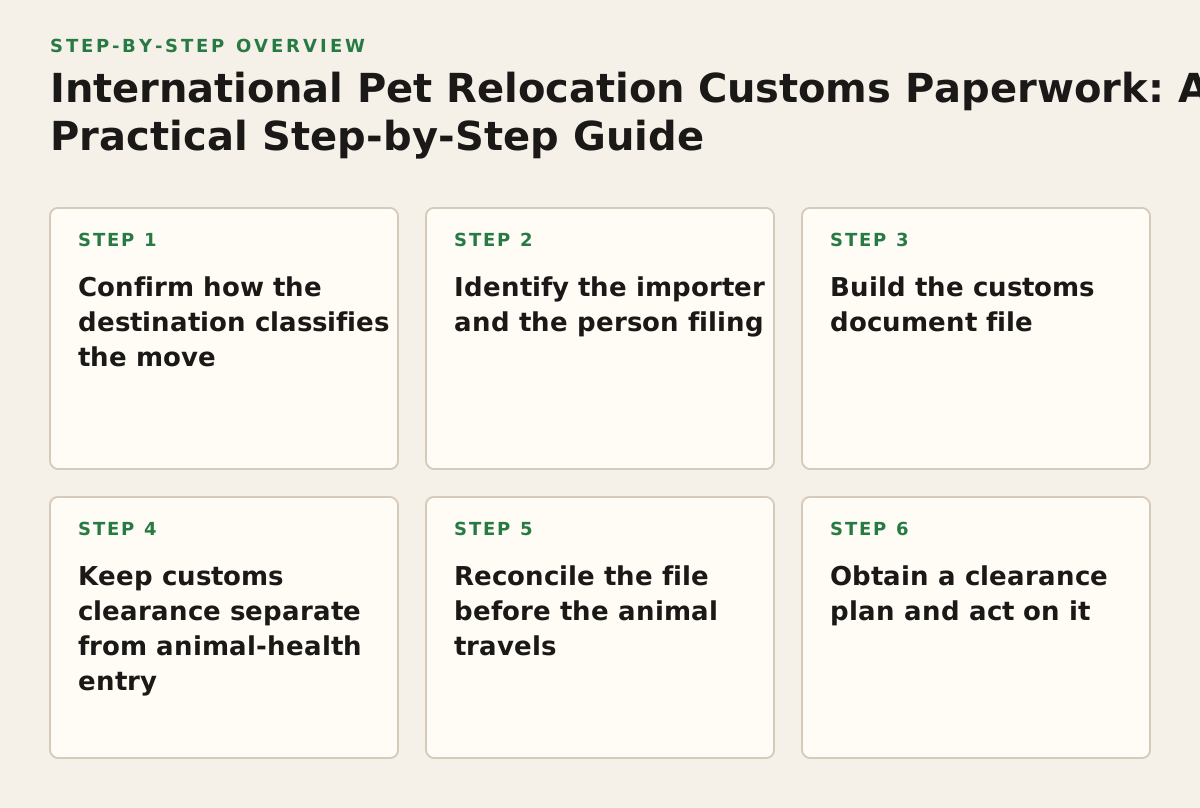
Step 1: Confirm how the destination classifies the move
Describe the move before collecting forms
Tell the destination customs authority or a licensed customs broker whether you are relocating with a pet you already own, importing a newly purchased animal, arranging a transfer between organizations, or shipping an animal for sale or breeding. These facts can affect whether the shipment qualifies for a personal-relocation procedure, falls under ordinary import rules, or needs a different permit. Do not assume “family pet” automatically means personal-effects relief; the destination authority makes that determination under its rules.
Ask whether the pet can be listed on a household-goods or transfer-of-residence declaration, or whether it needs a separate animal import declaration. For example, the UK has a transfer-of-residence relief process with its own eligibility and application conditions; it is not a blanket customs exemption for every arriving pet. Confirm the current process directly with the UK government’s transfer-of-residence guidance.
- State who owns the pet and when ownership began.
- Explain whether the pet is accompanying the owner or traveling separately.
- Disclose any purchase, sale, adoption, business transfer, or change of ownership tied to the move.
- Ask which personal-move or commercial-import procedure applies and request the answer in writing.
Step 2: Identify the importer and the person filing
Make responsibility explicit
Ask who must appear as the importer or declarant: you, an employer or government agency, a relocation company, or another party. Some destinations allow a customs broker to submit an entry on an importer’s behalf, but that does not automatically make the broker the owner or party responsible for accurate information. Get the filing party, authorization process, and payment responsibility confirmed before shipment.
For a PCS move or an official posting, the pet may travel separately from household goods or under a different consignee name. Match the pet shipment’s airway bill or other transport record to the person and declaration handling clearance. If a broker will file, ask what power of attorney or written authorization is needed, who will respond to customs questions, and how you will receive proof that the entry was accepted.
Keep roles distinct: a carrier moves the animal, a customs broker may prepare or submit an entry, and a veterinary authority may review animal-health documents. One provider may coordinate several tasks, but confirm which party is responsible for each filing and decision.
Step 3: Build the customs document file
Collect evidence of ownership, shipment, and value
Customs may request documents to establish who owns the animal, what is being shipped, and how the shipment should be classified or valued. The exact list depends on destination, route, and the move’s classification; ask the destination authority or broker for a written document list rather than treating this as a universal form set.
- Ownership and relocation: adoption or purchase record, registration or ownership statement, and evidence of your relocation when relevant.
- Shipment: airway bill or booking record, shipper and consignee details, route, and the animal’s description.
- Value and transaction: purchase invoice if applicable, or a written explanation of the pet’s status if there was no sale. Ask the authority whether it requires a declared value and how to document it.
- Customs filing: import declaration or entry reference, broker authorization if applicable, and any permit or relief approval required for the chosen procedure.
Do not invent a purchase price for an animal that is not being sold. Ask the broker how to report value or non-commercial status in the destination’s prescribed format, and retain the response with the shipment file.
Step 4: Keep customs clearance separate from animal-health entry
Track two document tracks
Customs paperwork addresses matters such as the import declaration, classification, value, and eligibility for relief. Animal-health paperwork addresses requirements such as identification, vaccination, testing, certificates, permits, or inspection. A customs release does not prove that an animal-health authority has approved entry, and a veterinary certificate does not replace a customs declaration.
Requirements depend on the destination and origin. The U.S. Department of Agriculture directs travelers to check the destination country’s requirements for pets exported from the United States; use its international pet travel guidance to identify the relevant country rules and certificate process. For movement within or into the European Union, consult the European Commission’s official pet-movement legislation. If the destination is Great Britain, check its current rules for bringing pets to Great Britain as a separate step from customs classification.
For Hawaii moves, do not label the state’s animal-entry process as international customs clearance. Hawaii has its own animal quarantine and entry procedures; check the Hawaii Department of Agriculture’s Animal Quarantine information and plan that process separately from any mainland transport arrangements.
Step 5: Reconcile the file before the animal travels
Use one consistent shipment record
Differences in names, dates, or shipment details can prompt questions or delay clearance. Compare the customs declaration, transport record, ownership evidence, and veterinary documents before submission. Names, microchip or other identification details, route, and consignee should agree wherever those fields appear. If the pet travels separately from you, make sure the file explains why and identifies who will meet the shipment.
| Check | What to compare | What to do if it differs |
|---|---|---|
| Owner and consignee | Names and contact details on the declaration and shipment record | Ask the filer whether an explanation or corrected document is required. |
| Animal identity | Description and identification details across health and transport records | Have the issuing professional or authority correct errors before travel. |
| Move classification | Personal relocation, purchase, transfer, or other declared purpose | Pause filing and obtain a destination-specific determination. |
| Clearance handoff | Who submits documents and who receives release confirmation | Record names, contact details, and the required release notice. |
Worked example: A family moving from the United States to Great Britain with a dog they already own asks its broker whether the dog qualifies for a personal-relocation procedure. The family supplies ownership evidence, the transport booking, and the relocation details; the broker confirms the declaration route and who files it. Separately, the family follows Great Britain’s pet-entry health rules. If the broker says the dog’s circumstances do not fit the requested customs treatment, the family asks the relevant authority which import route applies before the flight is booked.
Step 6: Obtain a clearance plan and act on it
Ask questions that produce usable answers
Before shipment, request a written sequence covering document submission, customs filing, any inspection or release step, and the handoff to the person collecting or delivering the pet. Requirements and filing practices vary by destination, so a broker’s general experience is not a substitute for confirmation against your specific origin, route, ownership facts, and arrival point.
- Which customs procedure applies to this pet and why?
- Who is the importer or declarant, and who submits the entry?
- Which ownership, shipment, value, and authorization documents are required?
- Where and when must documents be submitted, and how is release confirmed?
- Which veterinary or animal-health approvals are separate prerequisites?
- What happens if customs requests more information or the shipment arrives before clearance?
Start by emailing the destination customs authority or broker a concise summary of the move, including ownership history, origin, destination, travel method, and whether the pet is traveling with you. Ask for the applicable procedure and document checklist in writing before you finalize the shipment booking. For complex PCS moves, see our military pet shipping guidance; for moves to or from the islands, review Hawaii pet shipping alongside the state’s entry rules.
BestPetTravel can coordinate transport, airline arrangements, paperwork, customs support, tracking, and delivery logistics for international relocations. If you want help mapping the handoffs, start with BestPetTravel and share the route and move details.
Authored with NotFair SEO