
Air Cargo Pets: A Practical Guide to Safe Pet Air Transport
September 17, 2026
Air cargo pets explained: learn how airline cargo transport works, which documents and crates are required, and how to avoid costly relocation delays.
Air cargo pets are dogs, cats, and other eligible animals transported in an aircraft’s regulated cargo system rather than traveling in the passenger cabin. For many international, military, corporate, and Hawaii relocations, air cargo is the practical option when a pet is too large for an under-seat carrier, when the airline does not accept pets in the cabin, or when the itinerary requires specialized handling. The process involves airline approval, an airline-compliant crate, destination-specific veterinary documents, airport handoffs, and an arrival plan—not simply adding a pet to a passenger reservation.
What “Air Cargo Pets” means in practice
Air cargo pet transportation is a planned shipment through an airline’s cargo operation. The pet may travel on the same aircraft as the owner, on a separate flight, or through a combination of airline and ground transportation. The cargo booking identifies the animal, crate dimensions, origin, destination, shipper, consignee, and handling instructions. At the destination, the pet is released through the airline’s cargo facility or an authorized animal-handling process instead of the passenger baggage carousel.
This distinction matters because “cargo,” “checked baggage,” and “cabin travel” are different operating channels. Cabin travel places a small pet under the seat subject to the airline’s carrier limits. Checked-pet programs, where offered, move an animal as baggage under specific passenger and route conditions. Manifest cargo is a separate logistics product with its own booking desk, acceptance hours, waybill, handling procedures, and pickup arrangements.
Air cargo does not automatically mean an animal is placed in an unprotected or uncontrolled area. Airlines establish their own acceptance rules for temperature, aircraft type, crate condition, routing, and breed restrictions. However, airline policy controls the actual shipment. A crate or itinerary that appears acceptable in general may still be rejected if the operating carrier, connection airport, or destination authority has a stricter rule.
The International Air Transport Association publishes the Live Animals Regulations, a widely used framework for the preparation and handling of animals in air transport. The regulations address subjects such as container requirements, documentation, labeling, feeding instructions, and acceptance procedures; the operating airline’s rules and the destination government’s requirements still apply. Think of IATA guidance as the technical baseline, not a guarantee of acceptance.
How it differs from shipping an ordinary package
A pet shipment has several linked risk points. The airline must know what is inside the crate, airport personnel must be able to identify the animal and route it correctly, and the receiving party must be ready when the flight arrives. A missed document, an incorrect crate measurement, or a late arrival at the cargo terminal can interrupt the chain even if the flight itself operates normally.
- Cabin travel: usually limited by the carrier’s under-seat dimensions, the passenger’s ticket, and the airline’s cabin policy.
- Checked pet travel: available only on certain routes and aircraft, with restrictions that can differ from cargo rules.
- Air cargo: booked as a shipment, normally requiring cargo acceptance, a compliant crate, transport documents, and a named receiving party.
- Ground-only transport: useful when border rules, animal age, health concerns, or route limitations make flying unsuitable.
Why the cargo choice matters for a relocation
The correct transport channel is determined by the entire itinerary, not just the pet’s size. A military family moving from the continental United States to an overseas duty station may have a passenger booking that cannot accommodate the dog in the cabin. A family relocating to Hawaii may need a separate arrival process for the pet, regardless of whether the owner flies first. An executive moving internationally may need a discreet door-to-door plan that coordinates a private residence, an airport cargo terminal, customs, and final delivery.
Routing creates the main operational trade-off
A nonstop flight is often attractive because it reduces the number of airport handoffs. But the shortest geographic route is not always the most workable. The aircraft may not accept live animals, the cargo facility may lack suitable acceptance hours, or the destination airport may not process animal shipments when the flight arrives. A one-stop itinerary can be more practical if it uses an approved aircraft, a compatible connection window, and a receiving station that handles live animals.
When comparing routes, ask for the operating carrier on every flight segment, not only the airline selling the ticket. Also confirm:
- Whether the pet travels as manifest cargo or under a passenger-pet program.
- Whether every segment accepts the species, breed, crate size, and travel date.
- Where the pet is accepted and released at each airport.
- Whether a connection requires a rebooking, transfer, or additional document check.
- Who monitors the shipment if a flight is delayed, canceled, or diverted.
Air cargo may also be necessary when an owner and pet cannot travel together. A PCS move, diplomatic assignment, or corporate relocation may involve different departure dates, separate passenger tickets, or temporary housing. Cargo allows the pet’s movement to be scheduled as its own operation, but that independence creates a requirement for active coordination between the shipper and receiver.
Government rules are separate from airline rules
Pet import requirements come from the destination authority, not from the airline. The USDA explains that international pet travel requirements vary by destination and may include health certificates, vaccinations, tests, permits, and other documentation; its pet travel guidance directs owners to country-specific information. Requirements should be checked for the animal’s species, origin country, destination, transit points, and travel date.
For dogs entering the United States, the CDC’s dog importation requirements include conditions that can depend on where the dog has been during the relevant period, the dog’s age, health, vaccination history, and documentation. “The dog has a rabies vaccination” is not a complete import assessment. A dog may need additional records, a form, a reservation, or a specific arrival process depending on its travel history.
Hawaii is a particularly important example because it has state-level animal quarantine rules in addition to broader U.S. entry considerations. The Hawaii Department of Agriculture’s Animal Quarantine Information Page describes the state’s requirements and programs. Hawaii pet shipping must be planned around the state’s approval process, not treated as an ordinary domestic flight.
How an air cargo pet shipment works
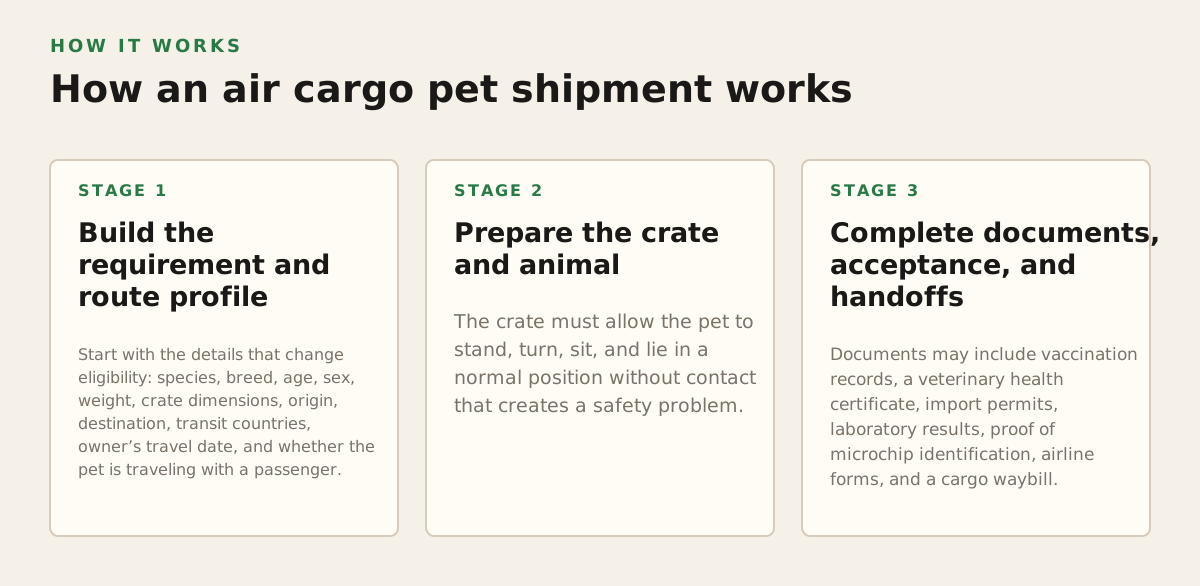
A reliable shipment is built backward from the destination’s release conditions. The planner first identifies the legal requirements, then works with the airline to find a route that can accept the animal, and finally schedules veterinary preparation and ground movements around those fixed points.
1. Build the requirement and route profile
Start with the details that change eligibility: species, breed, age, sex, weight, crate dimensions, origin, destination, transit countries, owner’s travel date, and whether the pet is traveling with a passenger. Include unusual facts early, such as a brachycephalic breed, a service or working-animal status, a military PCS deadline, or a destination that requires quarantine or preapproval.
The planner should then separate requirements into three columns:
- Government requirements: vaccines, microchip rules, tests, permits, health certificates, quarantine, and customs procedures.
- Airline requirements: accepted species and breeds, crate standards, temperature policies, cargo booking rules, and embargoes.
- Logistics requirements: pickup address, airport acceptance appointment, connection handling, customs broker or agent, and final delivery.
This separation prevents a common error: assuming that a government-approved document means the airline must accept the shipment. It does not. The document may satisfy an import authority while the crate, flight, or temperature conditions fail the airline’s acceptance review.
2. Prepare the crate and animal
The crate must allow the pet to stand, turn, sit, and lie in a normal position without contact that creates a safety problem. Exact specifications depend on the airline and applicable live-animal rules. Measure the animal in the position required by the carrier’s instructions rather than relying on a previous crate or a breed label.
A useful preparation checklist includes:
- Confirming the crate’s internal measurements against the pet’s actual height and length.
- Checking door security, ventilation, fasteners, floor condition, and absorbent bedding.
- Attaching identification that remains readable if the outer shipping label is damaged.
- Using water equipment accepted by the carrier and practicing its use before travel.
- Acclimating the pet to the crate gradually instead of introducing it on departure day.
- Asking the veterinarian about health risks and travel suitability rather than assuming sedation is appropriate.
Food and medication instructions deserve special care. Airline staff need clear written directions, but owners should not improvise a sedative plan to make the flight easier. A veterinarian can assess the pet’s health, age, breed-related risks, and medical history. Routine documentation and calm crate acclimation are safer planning tools than last-minute medication.
3. Complete documents, acceptance, and handoffs
Documents may include vaccination records, a veterinary health certificate, import permits, laboratory results, proof of microchip identification, airline forms, and a cargo waybill. Some documents must be issued or endorsed within a defined period, so preparing them too early can be as problematic as preparing them too late.
At origin, the pet is delivered to the airline’s cargo facility or an approved acceptance point. Cargo staff inspect the crate, documents, animal condition, and shipment details. After acceptance, the pet moves through the airline’s handling network. At destination, the receiving party may need to collect the pet from cargo, clear customs, present documents to authorities, or meet an appointed agent.
For door-to-door transportation, the shipment should have named responsibility for each transition:
- Residence to origin airport: secure pickup, document check, and arrival before cargo acceptance closes.
- Origin acceptance: airline inspection, waybill confirmation, and notification that the pet is accepted.
- Flight and connection: tracking of scheduled and actual movement, with an escalation plan for disruption.
- Destination release: customs, quarantine or inspection steps, cargo pickup, and document presentation.
- Final delivery: ground transport to the residence, hotel, base lodging, or other approved address.
As an illustrative example, a dog relocating from Virginia to an overseas assignment might require a residence pickup on Monday, veterinary documentation completed within the destination’s validity window, cargo acceptance Tuesday evening, a Wednesday flight with one connection, and a prearranged destination agent. Those dates are only a planning example; the actual schedule depends on the airline, government documents, and available flights.
Where air cargo pet plans commonly break
Most failures occur at interfaces: between a veterinarian and an endorsement authority, between a passenger itinerary and a cargo booking, or between an arriving flight and a closed customs office. Identifying the failure point early is more valuable than simply adding more paperwork.
Document timing and destination changes
A health certificate can be correct but unusable if the flight moves outside its validity period. A transit country may impose its own rules even when the pet does not leave the airport. A destination authority may require an original document, an official endorsement, or a permit number that must appear on the airway paperwork.
Before booking, create a document expiration calendar with the issue date, endorsement deadline, travel window, and destination release date. If a flight is changed, recalculate the calendar rather than assuming the original documents remain valid.
Temperature, aircraft, and embargo restrictions
Airlines can restrict live-animal acceptance during periods of extreme heat or cold, on particular aircraft, or at certain airports. The restriction may apply to the ground portion of the journey rather than the time in the air. A connection through a hot location can therefore make an otherwise acceptable route unavailable.
Do not promise a departure date until the carrier confirms the specific route. Keep a backup plan that may include a different airport, an alternate flight, a later travel date, or ground transport for part of the journey. A backup route is a welfare measure, not merely a scheduling convenience.
Crate, breed, and health mismatches
A crate can be large enough by weight but unsuitable by height or length. Certain breeds may face airline restrictions because of respiratory or handling concerns. Puppies, kittens, elderly pets, and animals with existing medical conditions may need a veterinarian’s individual assessment before travel.
The most useful prebooking questions are specific:
- Is this exact breed accepted on every operating segment?
- Does the airline require a particular crate design or material?
- Will the crate fit through the cargo facility’s acceptance process?
- Are there seasonal restrictions at the origin, connection, or destination?
- What happens if the pet arrives before customs or quarantine services reopen?
How practitioners apply air cargo planning to real relocations
The best approach changes according to the assignment, destination, and owner’s tolerance for complexity. A military move may prioritize deadline control and reimbursement documentation. An international family move may prioritize legal entry and home delivery. A Hawaii move may prioritize state approval before the flight is finalized.
Military PCS relocations
For a PCS move, begin with the official orders, the pet’s intended arrival location, and the family’s passenger itinerary. Keep copies of orders, receipts, veterinary records, and booking confirmations in one relocation file. If government support or reimbursement may apply, confirm the current policy with the responsible office rather than assuming every cargo charge is covered.
Families arranging military pet shipping should also plan for changes in report dates, temporary lodging, and limited control over the passenger flight. A pet may arrive before the family’s household goods or after the family has entered temporary quarters. The receiving address and backup caretaker therefore need to be decided before cargo acceptance.
International family and executive moves
For an international relocation, use the destination’s official checklist as the controlling document and verify every transit point. The owner’s preferred airport may not be the best cargo airport if it lacks a suitable connection or destination handling. A professional or diplomatic family may also need a discreet pickup, a secure receiving address, and a single coordinator who can communicate with the airline, veterinarian, customs representative, and driver.
For high-value or sensitive moves, “live tracking” should mean more than a generic flight-status link. The service plan should identify who confirms origin acceptance, who checks the connection, who receives the pet, and how status updates are escalated. Tracking is only useful when each status has an assigned action.
Hawaii relocations
For Hawaii, work backward from the state’s inspection or release requirements. Confirm the pet’s identification, vaccinations, documents, and any required approvals before treating the airline booking as final. Build time for an unexpected document correction or a change in the owner’s travel date.
Families arranging Hawaii pet shipping should decide whether they need airport-to-airport cargo or door-to-door delivery to a home, hotel, or military installation. The latter requires coordination after release, particularly if the pet is arriving outside normal business hours or the family is not yet in possession of a permanent address.
For veterinarians and relocation professionals, the practical recommendation is to screen every case with the same minimum data set: species, breed, age, weight, crate measurements, origin, destination, transit points, travel window, owner itinerary, and medical concerns. Then obtain airline confirmation for the exact route before finalizing nonrefundable steps. BestPetTravel can coordinate airline bookings, paperwork, customs support, live tracking, and delivery logistics for domestic and international moves; families can contact BestPetTravel when a shipment needs one coordinated plan from the door to the destination.
Authored with NotFair SEO